The World Bank has raised its forecast for Nigeria’s economic growth in 2026 to 4.3 per cent, up from the 4.0 per cent growth recorded in 2025, citing improving macroeconomic stability, stronger investor confidence and a gradual recovery in private-sector investment.
The new projection was contained in the World Bank’s October 2026 Africa Economic Update, released this week. The bank also expects Nigeria’s economy to expand by 4.4 per cent annually in 2027 and 2028, suggesting that the country could maintain growth above four per cent over the next few years if current economic improvements are sustained.
The revised forecast represents a positive assessment of Nigeria’s economic direction after several years of significant challenges. The country has been dealing with high inflation, currency instability, increased living costs and pressure on businesses following major economic reforms introduced by the Federal Government.
According to the World Bank, the improved outlook is being supported by greater macroeconomic stability, strengthening investor confidence and a gradual recovery in private investment.
The bank’s assessment also follows stronger-than-expected economic performance in the second quarter of 2026. Nigeria’s real Gross Domestic Product expanded by 4.43 per cent year-on-year during the period, compared with 4.23 per cent in the corresponding quarter of 2025.
Several sectors contributed to the expansion. Agriculture grew by 4.39 per cent, a significant improvement from the 2.82 per cent recorded a year earlier, while the services sector expanded by 4.6 per cent.
Oil-sector growth was even stronger, with real oil GDP increasing by 7.3 per cent during the quarter. Despite that improvement, however, the oil sector contributed only 0.2 percentage points to overall GDP growth, highlighting the increasing importance of non-oil activities to Nigeria’s economic expansion.
The World Bank identified financial services, information and communications technology, and real estate among the sectors helping to drive growth. Digitalisation and resilient domestic demand have supported activity in these areas, while agricultural production is also expected to continue recovering.
However, the picture is not entirely positive.
The bank warned that Nigeria’s industrial sector recorded slower growth, with industrial output expanding by about 4 per cent, compared with 7.5 per cent in the second quarter of 2025.
This slowdown indicates that some parts of the economy are still struggling, particularly industries that face high production costs, unreliable electricity, limited access to affordable financing and other operational challenges.
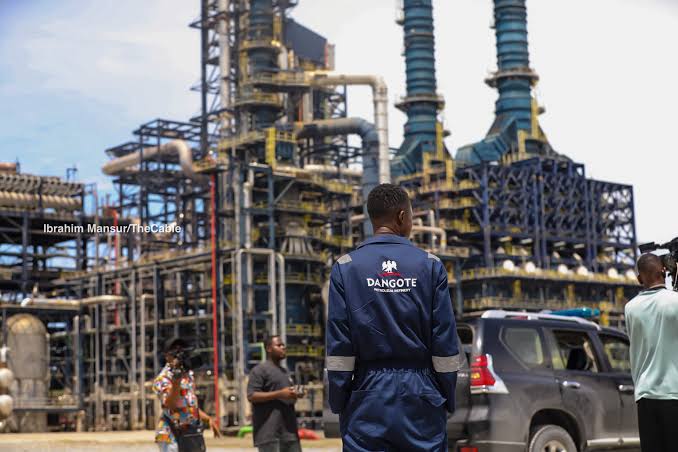
One of the biggest concerns highlighted by the World Bank is the effect of high fuel prices on poverty reduction.
Although Nigeria’s overall economic growth is expected to improve, the bank warned that elevated fuel costs could make it more difficult for poorer households to benefit from the recovery. Higher transport and energy costs can increase the prices of food and other essential goods, putting additional pressure on household incomes.
This is particularly important in Nigeria because petrol remains a major part of the country’s transportation system, while millions of businesses and households also rely on fuel-powered generators because of unreliable electricity supply.
When fuel prices rise, the effect is often felt beyond the filling station. Transport operators may increase fares, businesses may raise the prices of goods and services, and farmers and distributors can face higher costs for moving food and agricultural products from one location to another.
The World Bank therefore stressed that stronger GDP growth alone would not automatically translate into improved living conditions for Nigerians.
The quality of that growth will be crucial.
If economic expansion produces more jobs, stronger businesses, higher productivity and better incomes, the benefits could reach a wider section of the population. But if growth remains concentrated in a limited number of sectors while the cost of living remains high, many households may not immediately feel the improvement in economic statistics.
Another major warning from the World Bank concerns government spending ahead of the 2027 general elections.
The bank said increased government spending in the run-up to the elections could weaken the momentum of economic reforms and make it more difficult to maintain macroeconomic stability.
This is an important concern because Nigeria has been working to improve its fiscal position and restore investor confidence following the difficult economic adjustment that accompanied the removal of the petrol subsidy and changes to the foreign exchange system.
Higher government spending, if not carefully managed, could place additional pressure on inflation, government borrowing and the country’s fiscal position.
The World Bank’s warning therefore places additional importance on how the Federal Government manages public finances over the coming year.
Despite these concerns, the latest forecast represents an improvement in the international lender’s assessment of Nigeria.
The bank expects the economy to grow faster than it did in 2025 and sees further expansion in 2027 and 2028. The improved outlook also comes as Nigeria seeks to attract more private investment and expand economic activity outside the traditional dependence on crude oil.
President Bola Ahmed Tinubu has repeatedly argued that the government’s reforms are beginning to strengthen the foundations of the Nigerian economy. In his October 1 Independence Day address, he said the economy had grown by more than four per cent during 2026 and that both the oil and non-oil sectors were contributing to the recovery.
The President has also said the government is now moving from the initial phase of economic reforms towards a phase focused on shared prosperity, with greater emphasis on jobs, agriculture, manufacturing, infrastructure and reducing the cost of producing and transporting goods.
The World Bank’s latest forecast provides some support for the government’s argument that economic activity is improving, but it also makes clear that maintaining the recovery will require continued reforms and careful economic management.
For Nigerian businesses, sustained growth could mean increased demand, more investment opportunities and improved access to capital if investor confidence continues to strengthen.
For workers and households, however, the real test will be whether economic growth eventually results in more employment opportunities, higher incomes and lower pressure from food, transportation and energy costs.
The World Bank has therefore given Nigeria a more optimistic growth outlook, but its warning about fuel prices, poverty and pre-election spending shows that the country’s economic recovery remains fragile.
Nigeria is expected to grow by 4.3 per cent in 2026 and 4.4 per cent in both 2027 and 2028, according to the latest World Bank forecast. The challenge for the government now is to ensure that this projected growth becomes more inclusive and translates into tangible improvements in the daily lives of Nigerians.