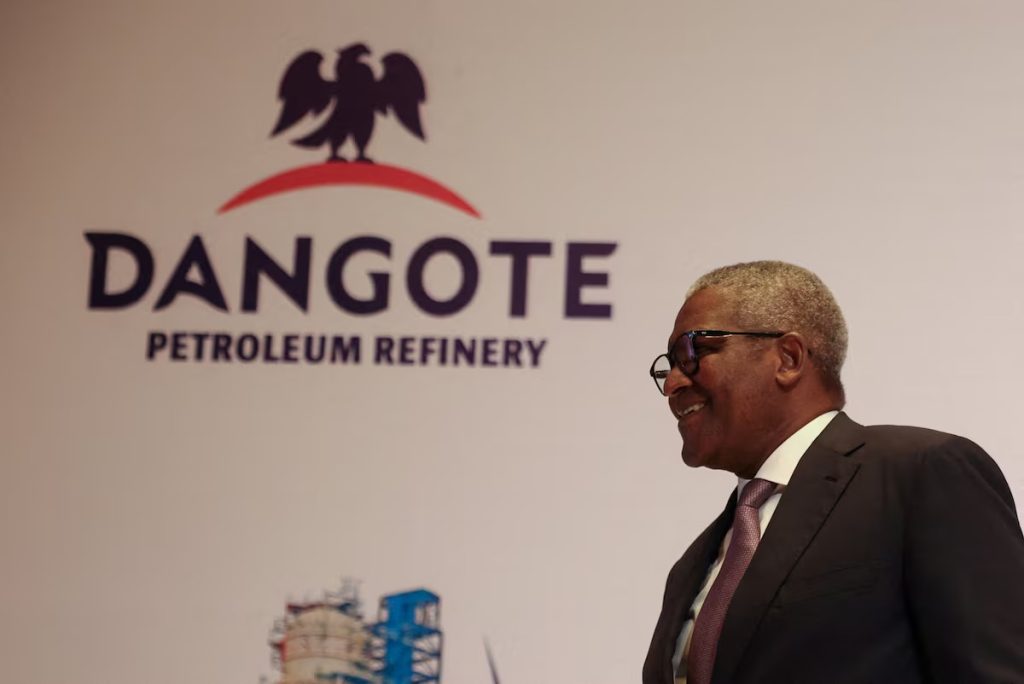
A fresh dispute has emerged in Nigeria’s downstream petroleum sector after the Dangote Petroleum Refinery stopped selling petrol to major oil marketers that continue to import the product, opening another major debate over competition, domestic refining and the future of fuel supply in the country.
The development comes at a sensitive time for Nigeria’s petroleum industry, as the country continues its transition from heavy dependence on imported refined petroleum products to greater reliance on locally refined fuel. The Dangote refinery has become a major player in that transition, and any disruption involving its relationship with fuel marketers could have implications for petrol availability, distribution and prices across the country.
According to reports, the refinery’s decision is linked to concerns over the continued importation of petrol by some major marketers. A refinery official reportedly said Dangote objected to the practice of importing petrol that could compete with locally refined products.
The disagreement has placed the refinery and some petroleum marketers on opposite sides of an increasingly important question: How should Nigeria balance the growth of domestic refining with the need to maintain competition and ensure adequate fuel supply?
For years, Nigeria depended heavily on imported petrol despite being one of Africa’s major crude oil producers. The country’s inability to refine enough petroleum products locally meant that significant quantities of petrol and other refined products had to be brought into the country to meet domestic demand.
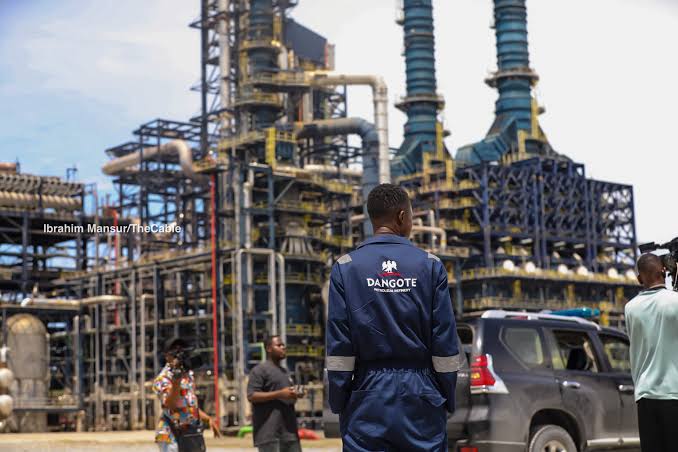
That situation began to change with the commencement of operations at the Dangote refinery in Lagos. The massive facility has been positioned as a major step towards reducing Nigeria’s dependence on imported refined petroleum products and increasing the country’s capacity to process its own crude.
The refinery has progressively increased its role in the domestic market, supplying petroleum products to distributors and marketers. Its expansion has been closely watched because increased local production could reduce pressure on Nigeria’s foreign exchange market and lower the country’s exposure to international fuel supply disruptions.
However, the latest disagreement shows that the transition to domestic refining is not without challenges.
Major marketers argue that imports remain important for maintaining competition and protecting the country’s fuel supply. They contend that allowing qualified companies to import petrol gives consumers and businesses alternatives and reduces the risk of relying too heavily on a single domestic supplier.
The dispute has also been complicated by a recent Federal High Court ruling directing the Nigerian Midstream and Downstream Petroleum Regulatory Authority, NMDPRA, to continue issuing import licences to qualified marketers in accordance with the Petroleum Industry Act.
The court’s position has therefore become an important part of the ongoing debate, particularly over whether qualified petroleum marketers should be allowed to import products even as domestic refineries increase production.
For consumers, the biggest concern is what the dispute could mean for petrol availability and pump prices.
Nigeria’s transport system remains heavily dependent on petrol, while millions of households and businesses use petrol-powered generators when electricity supply is unavailable. Any significant increase in the price or shortage of petrol can therefore quickly affect transportation costs, food prices and the cost of running businesses.
A reduction in the supply of petrol from major distributors could also create pressure on the downstream market if alternative sources are unable to immediately make up the difference.
The government will consequently be under pressure to ensure that the dispute does not develop into a wider supply problem.
The disagreement also raises questions about how Nigeria should structure its petroleum market now that domestic refining capacity is expanding.
On one hand, encouraging local refineries is important because Nigeria wants to reduce its dependence on imported petroleum products and keep more value within the country. Strong domestic refining capacity could create jobs, increase government revenue, reduce foreign exchange demand and support related industries.
On the other hand, competition remains important in any market. If consumers have access to products from multiple suppliers, marketers can compete on price, quality and distribution. The challenge for regulators is therefore to encourage local production without creating conditions that could unnecessarily restrict competition.
The Dangote refinery has previously maintained that its investment represents an opportunity for Nigeria to become less dependent on imported refined petroleum products. The facility is capable of processing large quantities of crude and producing petrol, diesel, aviation fuel and other petroleum products.
The refinery’s growing role has also changed the dynamics of Nigeria’s fuel market, particularly as the government continues to implement reforms following the removal of the petrol subsidy.
The subsidy removal fundamentally changed the way petrol is priced in Nigeria. Instead of the government absorbing a large portion of the cost, consumers now face market-driven prices that can change depending on crude oil prices, exchange rates, transportation costs and other factors.
This means competition among suppliers could become even more important.
The current disagreement between Dangote and major marketers is therefore more than a disagreement over one company’s decision to sell or withhold petrol. It reflects the broader transformation taking place in Nigeria’s petroleum industry.
Regulators will now have to carefully manage the situation to ensure that domestic refining continues to grow while qualified marketers retain access to the market in accordance with existing laws and court decisions.
Consumers, meanwhile, will be watching closely for any impact on petrol supply and pump prices.
The immediate concern is whether the disagreement will remain a commercial dispute between the refinery and individual marketers or develop into a wider confrontation involving regulators and other stakeholders in the petroleum industry.
As the Federal Government continues its efforts to make Nigeria less dependent on imported refined petroleum products, the outcome of this dispute could become an important test of how the country’s new downstream petroleum market will operate.
For now, attention is on the response of the NMDPRA, petroleum marketers and the Dangote refinery, as stakeholders attempt to resolve the disagreement while ensuring that Nigerians continue to have access to adequate petrol supplies.