Workers at the Port Harcourt Refining Company in Eleme, Rivers State, have threatened to shut down the refinery completely if the management of the Nigerian National Petroleum Company Limited fails to address their grievances over seven months of unpaid salaries and the delayed implementation of a new salary structure.
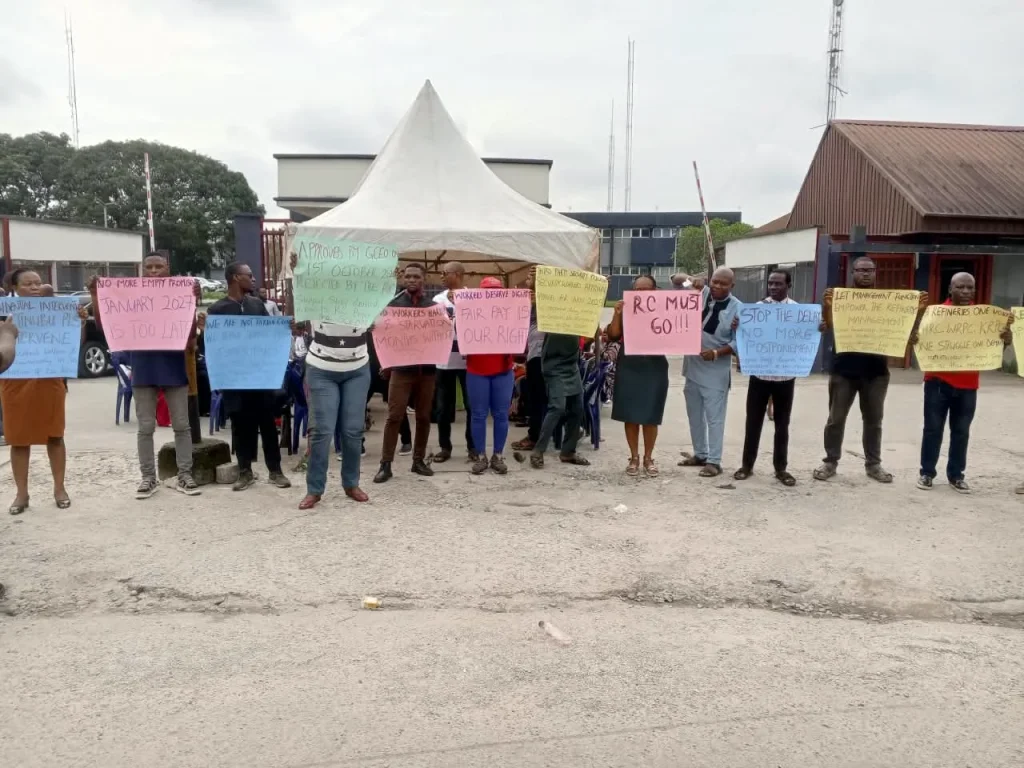
The workers, under the Support Staff Union of the Port Harcourt Refining Company, staged a protest at the refinery on Monday, barricading the entrance and putting up tents as they demanded urgent action from the NNPCL management. They subsequently issued a 48-hour ultimatum, warning that the entire facility could be shut down if their demands are not met within the period.
The dispute centres on a new salary and remuneration package which the workers said was approved by the Group Chief Executive Officer of NNPCL, Bayo Ojulari, and was expected to take effect from October 1, 2026.
According to the protesting workers, despite the reported approval, the new structure has not been implemented. They alleged that the Refinery Coordinator, Bayo Adelere, has failed to put the approved package into effect.
The workers described the situation as unfair, particularly because they said they have already endured months without receiving their salaries.
The union said its members are owed seven months’ outstanding salaries, in addition to other legitimate entitlements. The prolonged delay has reportedly created serious financial difficulties for workers who have continued to report to work while waiting for their outstanding wages.
The workers are also demanding a ₦1 million housing or rent relief for eligible support staff. They said the payment would help employees cope with the increasing cost of accommodation and other living expenses.
In addition to the financial demands, the union wants greater consultation between refinery management and recognised labour representatives whenever decisions affecting workers’ salaries, welfare and working conditions are being made.
During the protest, workers displayed placards expressing their frustration with the situation. Some of the messages called for the immediate implementation of the approved salary structure, while others demanded the removal of the refinery coordinator.
The union’s chairman, Bennett Isy, said the workers were not prepared to accept another delay, particularly after allegedly being told that implementation could be postponed until January 2027.
He argued that workers should not be asked to wait several more months for a salary structure that they said had already received approval.
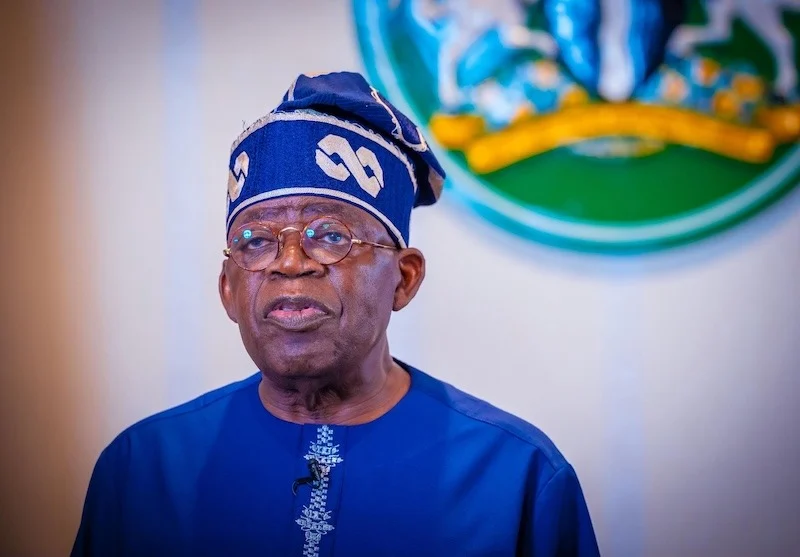
Isy also appealed directly to President Bola Ahmed Tinubu to intervene in the dispute and ensure that the workers’ complaints are addressed.
He warned that if the new salary structure was not implemented within 48 hours, the workers would move beyond the protest and completely shut down access to the refinery.
The threat is significant because the Port Harcourt refinery is one of Nigeria’s major state-owned petroleum refining facilities and has been at the centre of the Federal Government’s efforts to restore domestic refining capacity.
The labour dispute therefore comes at a sensitive time for Nigeria’s petroleum industry. The country has been trying to reduce its dependence on imported refined petroleum products by increasing the operation of domestic refineries and encouraging local refining.
Any prolonged disruption at the facility could add another challenge to the government’s efforts to strengthen domestic petroleum production.
The workers, however, insist that their action is not simply about salaries. They say their concerns also involve medical care, safety, welfare and the general treatment of support staff at the refinery.
One of the protesting workers, Joy Osueiya, said employees had been asked to wait until January 2027 for the implementation of the new salary structure but argued that the proposed delay was unacceptable.
She also raised concerns about the hazardous nature of work at the refinery, alleging that some workers had suffered serious injuries and that some colleagues had lost their lives.
Another support staff member, Godspower Nwakanji, appealed to the President to intervene, saying workers could not continue to cope with unpaid salaries and what he described as inadequate medical support.
The workers’ concerns highlight the wider issue of employee welfare within Nigeria’s petroleum industry, where refinery operations can involve significant occupational risks and require adequate safety measures, healthcare and compensation arrangements.
The union has made four major demands: immediate implementation of the approved salary and remuneration package, payment of the seven months of outstanding salaries and other entitlements, approval of the ₦1 million housing/rent relief, and improved engagement between management and recognised labour representatives.
The dispute could become more serious if NNPCL management and the workers fail to reach an agreement before the expiration of the 48-hour ultimatum.
A complete shutdown would potentially affect activities within the refinery complex and could create further uncertainty around operations at the facility. It could also put additional pressure on NNPCL management at a time when the company is expected to maintain and improve the performance of Nigeria’s domestic refining assets.
The situation also places the Federal Government in a difficult position. While authorities want Nigeria’s refineries to operate efficiently and contribute to domestic fuel supply, unresolved labour disputes could disrupt operations and undermine efforts to rebuild confidence in the country’s state-owned refining infrastructure.
For the workers, however, the immediate priority remains the payment of their salaries and the implementation of the benefits they say have already been approved.
As of the latest reports, the workers were waiting for a response from NNPCL management to their demands. There has not yet been a public resolution of the dispute, leaving the possibility of further industrial action if the 48-hour deadline expires without an agreement.
The coming days will therefore be important for the Port Harcourt Refining Company, its workers and NNPCL management. A negotiated settlement could prevent a shutdown and allow operations to continue, while failure to resolve the dispute could lead to a wider labour confrontation at one of Nigeria’s strategically important petroleum facilities.