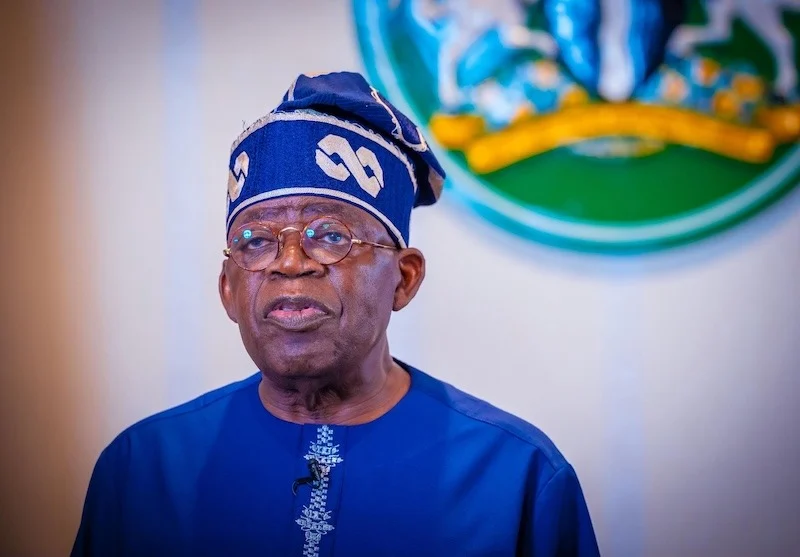
President Bola Ahmed Tinubu has said Nigeria is making significant progress in reducing its dependence on crude oil revenue, as the Federal Government intensifies efforts to expand other sectors of the economy, including agriculture, manufacturing, digital technology and the creative industries.
The President made the statement on Tuesday in Abuja during activities marking the fifth anniversary of the Nigerian Upstream Petroleum Regulatory Commission (NUPRC). He was represented at the event by Vice President Kashim Shettima. According to the Federal Government, the country is gradually moving towards a more diversified economic structure in which crude oil will no longer be the dominant source of government revenue.
Tinubu said the administration’s economic strategy is focused on building an economy that can generate stronger and more sustainable revenue from several sectors rather than relying heavily on crude oil.
For decades, Nigeria’s economy has been strongly tied to crude oil. Oil exports have traditionally provided a significant share of the country’s foreign exchange earnings and government revenue, leaving the economy vulnerable whenever international oil prices fall or production is disrupted.
The President’s latest comments therefore reflect one of the major economic objectives of his administration: reducing the country’s exposure to fluctuations in the international oil market while increasing the contribution of other productive sectors.
According to the Federal Government, agriculture, manufacturing, technology and the creative economy are increasingly being positioned as important drivers of economic growth. The administration believes that expanding these sectors can create more jobs, increase exports and generate additional sources of income for the country.
Tinubu also pointed to improvements in oil production, saying that crude output has become steadier and stronger following cooperation among security agencies, oil operators, host communities and the NUPRC.
The improvement in oil production remains important because, despite the government’s push for diversification, crude oil continues to play a major role in Nigeria’s economy. Increasing production can provide the government with additional revenue while the country develops alternative sources of economic growth.
The administration has also argued that reducing oil dependence does not mean abandoning the petroleum sector. Instead, the government wants to increase efficiency and investment in the sector while using revenue from oil to support broader economic development.
This approach comes as Nigeria continues to implement major economic reforms introduced since Tinubu took office in 2023.
The reforms have included the removal of the petrol subsidy and changes to the foreign exchange system. While these policies have generated significant economic pressure for households and businesses, the government maintains that they were necessary to correct longstanding structural problems and place the economy on a stronger footing.
In his Independence Day address earlier this month, Tinubu said Nigeria’s economy had grown by more than four per cent in 2026 and that both the oil and non-oil sectors had contributed to the growth. He also said inflation had fallen substantially from its peak, foreign reserves had been rebuilt and the foreign exchange market had stabilised.
The President further stated that Nigeria generated more than $6 billion in non-oil export revenue in 2025, which he described as the highest such revenue recorded in the country’s history.
For the government, these figures are evidence that the Nigerian economy is gradually becoming less dependent on crude oil and developing stronger non-oil sources of income.
However, the major challenge remains converting economic growth and increased government revenue into improvements that ordinary Nigerians can actually feel.
Millions of Nigerians continue to deal with high living costs, while businesses face challenges involving electricity, access to affordable credit, transportation, infrastructure and the cost of raw materials.
The government has acknowledged that economic growth alone is not enough. Tinubu has said the next phase of his administration should focus on shared prosperity, with the benefits of economic growth reaching households, workers, farmers and businesses.
In his Independence Day address, the President said the government wants to lower the cost of producing and transporting goods, expand mechanised agriculture, improve irrigation, increase access to seeds and fertiliser, strengthen storage facilities and develop roads, railways and ports connecting producers to markets.
Manufacturing is also expected to play a major role in this next phase.
The government wants to attract investment into factories and industries that can process Nigerian raw materials locally rather than exporting them in their raw form. The idea is that increased local processing could create employment, strengthen domestic supply chains and increase the value of Nigerian exports.
The digital economy and creative industries are similarly being promoted as areas with the potential to provide opportunities for Nigeria’s large and youthful population.
Nigeria already has a growing technology and entertainment sector, and the government is seeking to build on this growth by encouraging investment, skills development and access to markets.
Agriculture remains another major priority because of its potential to provide employment and strengthen food security. The administration has said it wants farmers to produce more at lower costs while improving access to infrastructure and markets.
The success of this diversification strategy will ultimately depend on whether investment actually reaches these sectors and whether businesses can operate in a more predictable environment.
Investors will be watching issues such as electricity supply, taxation, access to foreign exchange, infrastructure, security and regulatory stability.
For ordinary Nigerians, however, the most important measure will be whether diversification creates more jobs, better incomes, affordable food and lower living costs.
The Federal Government says the country has now moved beyond what it describes as the most difficult stage of its economic reforms and is entering a phase focused on prosperity and wider economic opportunities.
Whether that promise becomes reality will depend on how effectively the government can turn stronger economic indicators into tangible improvements in people’s daily lives.
For now, Tinubu’s latest remarks signal that the Federal Government intends to continue reducing Nigeria’s reliance on crude oil while expanding other productive sectors of the economy. The government says the ultimate goal is to build an economy capable of generating sustainable growth, employment and prosperity even when oil prices or production levels change.