\n\nThe Democratic Alliance (DA), long perceived as the party of South Africa’s racial minorities and a self-styled beacon of clean governance, has suffered a significant blow to its reputation. Its leader, John Steenhuisen, has been forced to announce his resignation after becoming engulfed in a series of scandals, setting the stage for a potentially divisive leadership contest.
For the first time since the end of apartheid, the DA entered a national unity government following the 2024 election, which produced no outright winner. It joined the African National Congress (ANC)—Nelson Mandela’s party that has governed since 1994—securing six ministerial posts. Steenhuisen himself took on the crucial agriculture portfolio.
Race remains a deeply sensitive faultline in South African politics, 32 years after the end of legalised racism. The transition to democracy may have dismantled apartheid, but it has not erased the country’s deep-seated divisions. With Steenhuisen’s departure, the party now faces a potentially explosive leadership battle between a black and a white candidate.
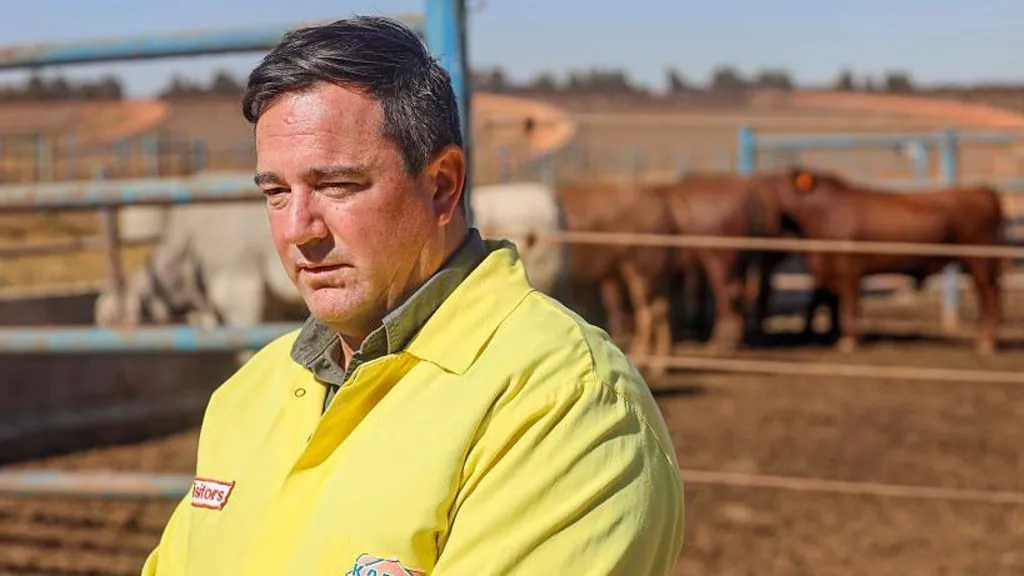
Steenhuisen, 49, found himself caught in a difficult position: tasked with making the coalition government function while simultaneously proving to his traditional supporters that the party was delivering on its promises. However, his tenure was quickly overshadowed by intense criticism from the farming community over his handling of a severe foot-and-mouth disease outbreak that has devastated South Africa’s livestock industry.
The crisis exposed deeper issues within the party’s internal culture. Theo de Jager, executive chair of the Southern African Agri Initiative (SAAI), levied serious accusations against Steenhuisen’s leadership style. He claimed that anyone who “dares to voice criticism” of the minister’s handling of the outbreak is “pushed out, excluded, isolated, targeted, and treated with suspicion.”
The allegations, combined with the political missteps, have shattered the DA’s carefully cultivated image as a “squeaky clean” alternative to the ANC, leaving the party at a critical crossroads as it prepares to choose a new leader.
For the Democratic Alliance (DA), the criticism marks a significant reputational blow. The party has long positioned itself as a more democratic and competent alternative to President Cyril Ramaphosa’s African National Congress (ANC). Now, however, it finds itself under fire from one of its core constituencies: South Africa’s predominantly white farmers, many of whom traditionally vote for the centrist DA or the right-wing Freedom Front Plus.
But the most damaging revelation for John Steenhuisen was a financial scandal—possibly the first of its kind to embroil a DA leader.
The *Daily Maverick* news site broke the story that Steenhuisen had a default court judgment against him for unpaid personal credit card debt amounting to nearly 150,000 rand ($9,400; £6,700). The disclosure raised eyebrows given that his annual salary at the time was 2.69 million rand ($168,000).
In his defence, Steenhuisen pushed back against the implication of impropriety. “My personal finances have nothing to do with the *Daily Maverick*,” he stated, “unless you can demonstrate that illegal funds or the proceeds of corruption or abuse of office or undue benefits have flowed into or out of my accounts.”
Despite his rebuttal, the disclosure tarnished both his personal reputation and that of his party. Critics questioned how a leader who appeared unable to manage his own finances could be trusted to oversee the nation’s fiscal affairs.
The scandal coincided with another politically sensitive move: Steenhuisen successfully lobbied Ramaphosa to remove Environment Minister Dion George from his post. George also served as the DA’s federal finance chair.
While no official reason was given for the dismissal, multiple reports suggested it was linked to George’s strong stance against wildlife trafficking—a significant and sensitive issue in South Africa. Conservation groups had widely praised George for championing reforms in the conservation sector, particularly his vocal calls to end captive lion breeding. His removal puzzled environmental advocates and added another layer of controversy to Steenhuisen’s embattled leadership.