Nigeria’s Dangote Petroleum Refinery’s $1.6 billion initial public offering (IPO) has highlighted the difficulties investors face when trying to invest across African countries, despite growing interest in the continent’s major industrial projects.
In a report published on Friday, October 9, Reuters said the share sale, presented as an opportunity for Africans to own a stake in one of the continent’s largest industrial facilities, has encountered regulatory and financial-market barriers that have limited participation outside Nigeria.
The offering is part of an effort by Dangote Petroleum Refinery and Petrochemicals to raise capital for its business and planned expansion. However, the process has exposed how differences in national securities regulations can complicate cross-border investment, even when investors in other African countries are interested in participating.
Investors face regulatory challenges
According to Reuters, the refinery’s share offering was registered as a public offer in Nigeria, where the Securities and Exchange Commission approved the transaction. Investors in other African countries faced additional requirements because Nigeria’s regulatory approval does not automatically authorise the sale of securities in other jurisdictions.
This meant that interested investors in countries such as Kenya and Botswana had to navigate their own national regulations and approval processes before they could participate.
The situation created difficulties for investors who had hoped to buy shares but could not complete the necessary steps within the available timeframe. The report noted that the offering initially had limited authorised channels for investors outside Nigeria, adding another obstacle to participation.
The challenges have raised questions about how African countries can make it easier for citizens to invest in businesses operating elsewhere on the continent.
Dangote calls for stronger African capital markets
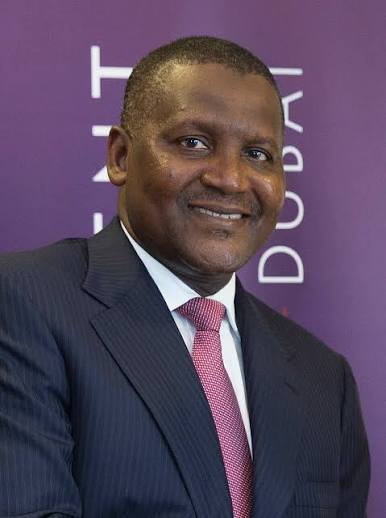
Aliko Dangote, the refinery’s majority owner, told Reuters that the difficulties were a temporary problem associated with operating across different regulatory systems.
He called for African capital markets to collaborate more closely and make it easier for investors to participate in investment opportunities across national borders.
Dangote also pointed to a proposed refinery project in Lamu, Kenya, as an example of how future industrial projects could be listed in local markets while remaining accessible to investors elsewhere in Africa.
Greater cooperation between stock exchanges and financial regulators could help businesses raise capital from a wider pool of investors, rather than depending mainly on the domestic market.
The issue is particularly important for large industrial projects that require substantial funding to build facilities, expand production and develop supporting infrastructure.
A major fundraising opportunity for Nigeria
The Dangote Refinery IPO is seeking approximately $1.6 billion, making it one of the largest share offerings associated with an industrial business in Africa.
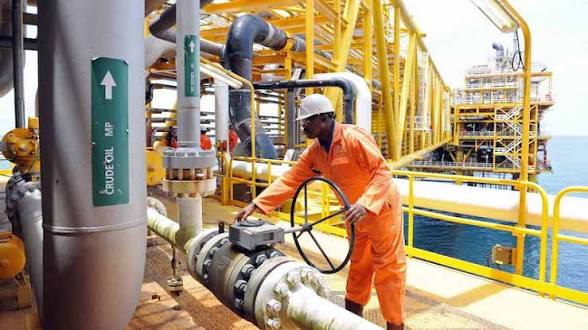
The refinery, located in the Lekki area of Lagos State, has a stated processing capacity of 700,000 barrels of crude oil per day. Its planned expansion is expected to increase that capacity to 1.4 million barrels per day.
The public offering is designed to broaden ownership of the refinery while raising funds to support its growth plans. Investors can apply for as few as 10 shares, priced at ₦525 each, subject to the offer’s terms and eligibility requirements.
The relatively low minimum investment was intended to make participation possible for more individual investors. However, the experience of investors outside Nigeria shows that affordable share prices alone do not guarantee easy access to an investment opportunity.
What this means for African businesses
The challenges surrounding the offering reflect a broader issue affecting investment across Africa. Although regional economic integration has been a long-standing goal, differences in financial regulations, trading infrastructure and investor registration requirements continue to complicate cross-border transactions.
For businesses seeking funding, these barriers can limit the number of potential investors and make fundraising more complicated. For individual investors, they can create additional costs and paperwork, or prevent participation altogether.
A more coordinated approach could help African companies attract savings from investors across multiple countries. It could also give ordinary citizens more opportunities to participate in the growth of major businesses beyond their home markets.
Nevertheless, stronger regional investment systems would require cooperation among securities regulators, stock exchanges, financial institutions and governments.
What happens next?
The Dangote Refinery share offering has brought renewed attention to the relationship between industrial development and financial-market integration in Africa.
The company’s ability to attract investors will be important to its fundraising objectives, while the difficulties encountered by some overseas investors could encourage discussions about improving regional investment rules.
For Nigeria, the offering represents an opportunity to mobilise domestic capital for a major industrial asset. For the wider continent, it has exposed the need to make investment opportunities more accessible across borders.
The broader question is whether African financial markets can develop systems that allow investors to support businesses across the continent without facing unnecessary regulatory obstacles.