The Lagos State Government has ordered the deployment of 160 new waste compactors as part of efforts to address delays in refuse collection and improve sanitation across the state.
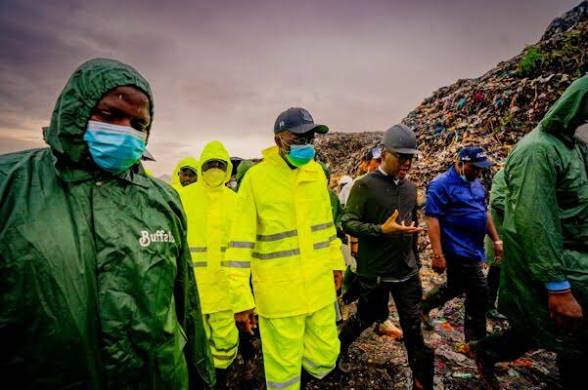
The directive was given by Governor Babajide Sanwo-Olu following concerns over the accumulation of refuse in some parts of Lagos. The government said the situation was unacceptable and that immediate measures were needed to strengthen the state’s waste management system.
The move is expected to increase the capacity of the Lagos State Waste Management Authority (LAWMA) to collect and transport waste from residential areas, markets and other locations across the state.
Waste management remains a major challenge for Lagos because of the state’s large population and the enormous volume of refuse generated every day. Delays in collection can quickly result in overflowing waste points, blocked drainage channels and unpleasant conditions for residents.
The government’s latest intervention is therefore aimed not only at removing existing refuse but also at improving the efficiency of the collection system.
The additional compactors are expected to support LAWMA’s operations and help reduce the time between waste generation and collection. The government has also continued to engage with private-sector operators involved in waste collection as part of its broader environmental management strategy.
The issue has become particularly important as Lagos continues to experience rapid urban growth, with residential and commercial developments expanding across the state.
Beyond the government’s responsibility, residents have also been urged to dispose of waste properly and avoid dumping refuse in drainage channels and other unauthorised locations. LAWMA has continued enforcement against indiscriminate dumping, including recent arrests of residents accused of disposing of refuse in drains during rainfall.
The Lagos Government’s latest action signals an attempt to combine increased equipment and stronger enforcement to improve the city’s sanitation system.
For residents, the success of the intervention will ultimately depend on how quickly the additional compactors are deployed, how efficiently collection routes are managed and whether waste is consistently removed from communities.
With Lagos continuing to expand, effective waste management remains critical to public health, flood prevention and the overall quality of life across the state.