\n\n
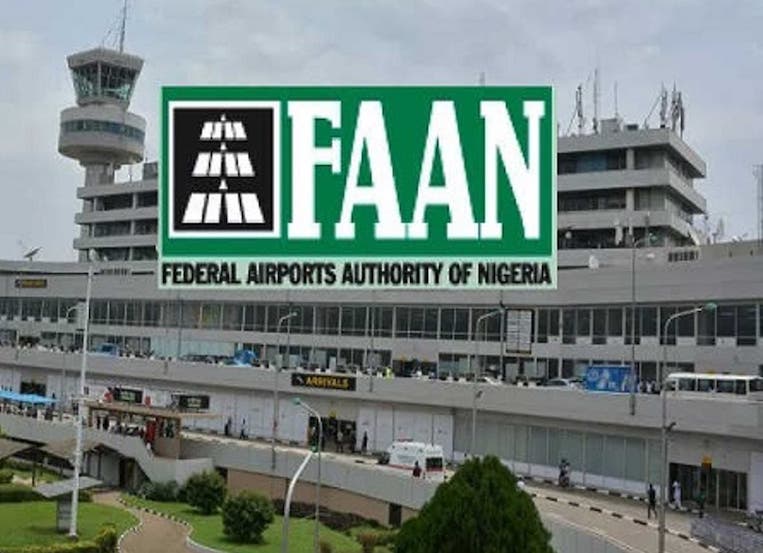
The Federal Airports Authority of Nigeria (FAAN) has concluded arrangements to demolish the old international terminal of the Murtala Muhammed Airport, Lagos—known as Terminal 1—and erect a new structure within 22 months.
The federal government had in August last year earmarked N712.26 billion for the rehabilitation of the terminal, which began operations in 1979 with an annual passenger capacity of 250,000.
In an exclusive interview with THISDAY, FAAN’s Director of Airport Operations, Captain Abdullahi Zubeir Mahmood, disclosed that a recent inferno affecting a section of the facility has made the rebuilding more urgent. According to him, the federal government is poised to commence the transformation immediately.
Fire Accelerates Timeline
“Just like exactly what the minister said when he addressed journalists on Tuesday. We already have a plan to rehabilitate the terminal. And the plan is for the concessionaires to move out probably in the next two to three weeks. That is our target plan for them to move out,” Mahmood explained.
“But with this fire now, nobody is going to stay in that building again. In a few days, the terminal will be emptied and it will be ripped off. The fire has led to accelerated work on the structure. It has given us acceleration time. What we want to do is just to move the equipment that are there to the temporary terminal.”
He added that four airlines would use the temporary terminal for departures, noting that arrivals had already been moved to Terminal 2 before the fire incident.
Budget and Structural Integrity
There are indications that the initial budget for the rebuilding may be reviewed upward due to the fire damage. Mahmood noted that the integrity of the structure would now have to be assessed.
“We still maintain the initial budget for now; but definitely, because of this fire, we cannot say. I am not going to say whether the budget will increase or not but we have to take cognizance of the fact that now, there is fire. So, naturally, they have to do an integrity test on the structure. But we are hoping nothing serious will happen to the structure,” he said.
Addressing Capacity Challenges
One of the challenges faced by FAAN has been passenger traffic management, as the new terminal has limited capacity compared to the old facility. The new terminal became fully operational in October 2023 following a directive by the Minister of Aviation and Aerospace Development, Festus Keyamo, that all international airlines should relocate to the facility.
Mahmood explained that rebuilding the old terminal had become inevitable to accommodate surging passenger traffic.
“The capacity of the first terminal had been overstretched. That was what called for the need for additional terminal. The old terminal was built for a capacity of 250,000 per annum and later it was servicing four million passengers. So, what do you expect? The facility was over-utilised. And there was no provision for expansion. That was why Terminal 2 was built,” he said.
He expressed confidence that the temporary terminal and Terminal 2 would adequately accommodate operations during the reconstruction period.
“By the time the old terminal is rebuilt in 22 months, people are going to move back there. So, it is going to reduce the pressure,” Mahmood added.
Operational Disruptions and Contingency Plans
Mahmood acknowledged that the movement of passengers and airport users would be disrupted during the reconstruction but assured that FAAN had pre-emptively set out structural plans to overcome the challenges.
He also commended air traffic controllers who, despite the trauma caused by the fire, continued to work with unusual dedication. Mahmood disclosed that a Mobile Tower would be installed at an elevated location to enable controllers to maintain full visibility of the airport.