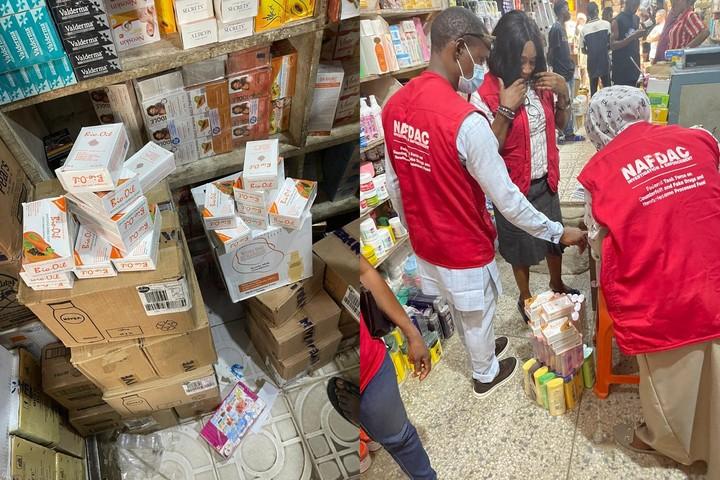
The National Agency for Food and Drug Administration and Control (NAFDAC) has shut down Zuba International Market in Abuja following the discovery of counterfeit, expired and prohibited products valued at more than ₦300 million.
The closure followed a joint enforcement operation involving NAFDAC, the Nigeria Police Force and the Department of State Services (DSS).
During the operation, officials reportedly inspected more than 160 shops and warehouses within the market, uncovering large quantities of products considered unsafe for public consumption.
Among the seized items were counterfeit alcoholic beverages, expired products, prohibited drinks packaged in small sachets and bottles, as well as fake product labels.
NAFDAC’s North-Central enforcement head, Babatunji Omoyeni, explained that the operation was part of the agency’s ongoing efforts to remove unregistered and unsafe products from Nigerian markets.
The agency particularly raised concerns about alcoholic beverages packaged in 50ml and 100ml sachets, as well as small bottles below 200ml, which fall under the government’s prohibition.
Officials warned that the sale and distribution of such products could expose consumers to serious health risks, especially when the contents are poorly manufactured, contaminated or falsely labelled.
The agency also indicated that investigations would continue, with shop owners and individuals connected to the distribution of the seized products facing possible prosecution.
The development comes amid growing concerns about the circulation of fake medicines, counterfeit food products and unregulated alcoholic beverages in Nigerian markets.
NAFDAC has repeatedly urged traders to obtain products from authorised distributors and ensure that items meet the country’s regulatory requirements.
Consumers have also been advised to check product registration details, manufacturing information and expiry dates before purchasing food, drinks and medicines.
The agency’s latest enforcement action sends a warning to traders involved in the production, storage and distribution of unsafe consumer goods.
Why this matters: Counterfeit and expired products pose serious risks to public health. The closure of the market highlights the importance of stronger regulatory enforcement and consumer awareness across Nigeria.