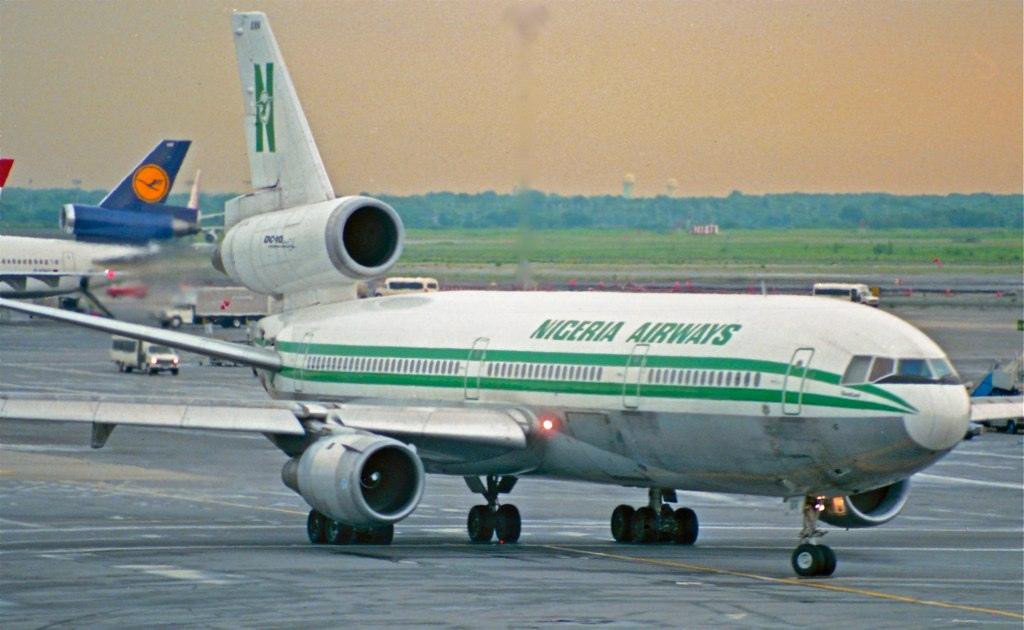
Nigeria’s Senate has rejected a proposal to revive the country’s defunct national airline, Nigeria Airways, arguing that the government should focus on establishing a new and sustainable national carrier instead.
The decision followed a debate at the Senate on Tuesday, November 3, during discussions on improving Nigeria’s aviation relationship with China and strengthening the country’s international air transport sector.
The motion, sponsored by Senate Chief Whip Mohammed Monguno, focused on the implementation of the Bilateral Air Services Agreement between Nigeria and China.
During the debate, Senator Ned Nwoko proposed that the Federal Government should consider reviving Nigeria Airways and the former Air Nigeria as part of efforts to strengthen the country’s aviation industry.
However, Senate President Godswill Akpabio rejected the proposal, describing the former airlines as defunct entities that could not simply be brought back to life.
The Senate instead supported the idea of establishing a new national carrier that would be properly managed, financially sustainable and capable of competing with international airlines.
Senate wants stronger aviation ties with China
Beyond rejecting the revival proposal, lawmakers called on the Federal Government to renegotiate and properly implement the existing aviation agreement between Nigeria and China.
The Senate wants Nigerian airlines to enjoy reciprocal access to Chinese airports, allowing them to operate more direct international routes and compete more effectively in the global aviation market.
Lawmakers also urged the Ministry of Foreign Affairs to engage Chinese authorities on making business visas easier for Nigerian traders and securing landing slots for Nigerian airlines.
The Senate further directed its Committees on Aviation and Foreign Affairs to monitor the implementation of the resolutions and report back within four weeks.
What this means for Nigerian travellers
Nigeria’s aviation industry has faced several challenges, including high operating costs, limited international routes, expensive air tickets and difficulties competing with established foreign airlines.
A properly managed national carrier could help improve international connectivity, create employment opportunities and provide more options for Nigerian travellers.
However, establishing a new airline would require significant investment, effective management, reliable aircraft and a clear business structure to prevent the financial difficulties that affected previous national carriers.
The Senate’s position suggests that lawmakers want the country to learn from its past aviation experiences rather than repeat them.
For now, the Federal Government is expected to consider the Senate’s recommendations as discussions continue on improving Nigeria’s aviation industry and strengthening its relationship with China.