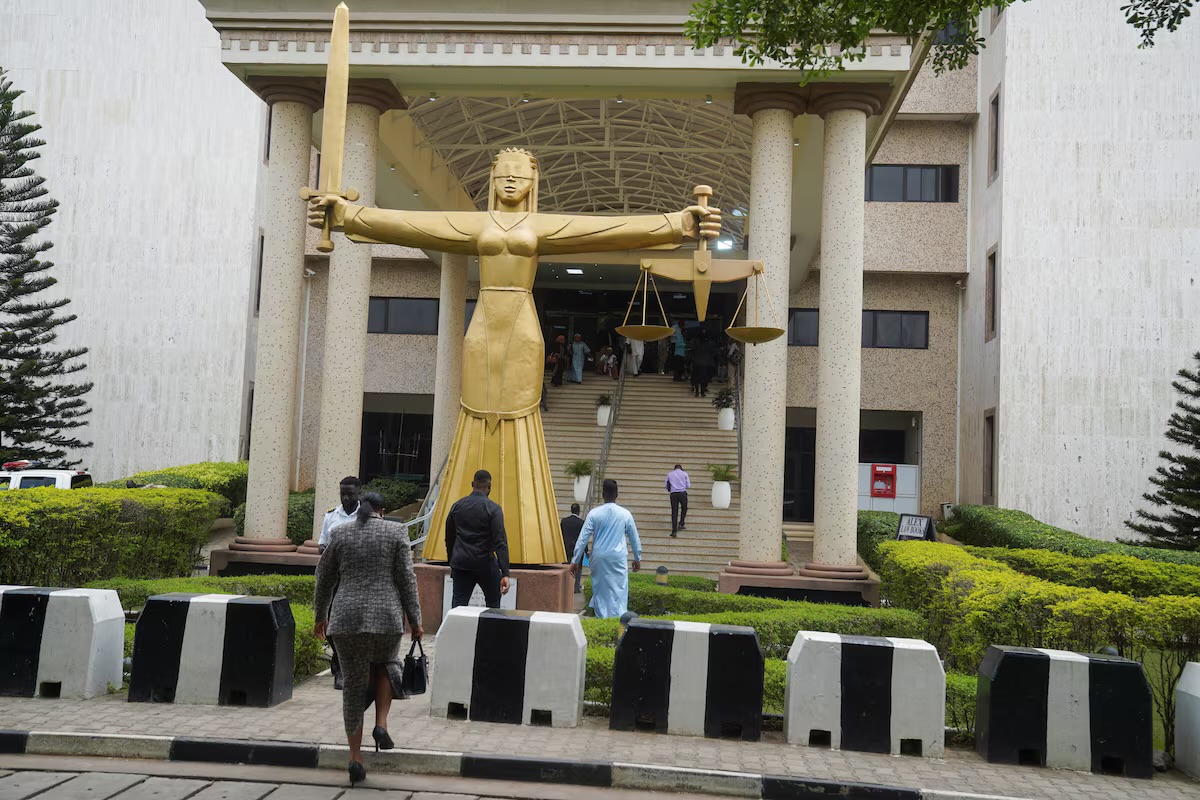
\n\nA Federal High Court in Abuja has ordered the final forfeiture of 48 properties allegedly linked to former Attorney-General and Minister of Justice Abubakar Malami to the Federal Government, marking a major development in one of Nigeria’s high-profile anti-corruption cases.
The ruling followed an application by the Economic and Financial Crimes Commission (EFCC), which argued that the assets were suspected to have been acquired through proceeds of unlawful activities. According to the court, the EFCC presented sufficient evidence to justify the permanent seizure after no successful legal challenge was made within the period allowed by law.
The forfeited assets reportedly include residential buildings, commercial properties, a university campus, an agro-processing facility, and several other real estate investments spread across different parts of northern Nigeria and the Federal Capital Territory.
Malami, who served as Nigeria’s Attorney-General between 2015 and 2023, is facing multiple money laundering and conspiracy charges involving billions of naira. He has denied the allegations and pleaded not guilty. The criminal proceedings against him are expected to continue separately from the asset forfeiture case.
The judgment has attracted widespread public attention, with many Nigerians viewing it as another significant step in the country’s ongoing efforts to strengthen accountability and recover assets believed to have been acquired through corruption. Legal experts note that asset forfeiture proceedings are civil in nature and are separate from criminal trials, meaning the outcome does not automatically determine guilt or innocence in the pending criminal case.
The EFCC has maintained that recovering illicit assets remains a key part of its anti-corruption strategy, while observers say the case underscores the judiciary’s role in ensuring public resources are protected and recovered where necessary.