In three Akwa Ibom oil communities, families now live within metres of blazing gas flares that have turned night into daylight, poisoned air and water, and exposed the widening gap between Nigeria’s oil wealth and the lives sacrificed for it.
In Onna, Akwa Ibom State, in the South-south region of Nigeria, darkness has been replaced by fire.
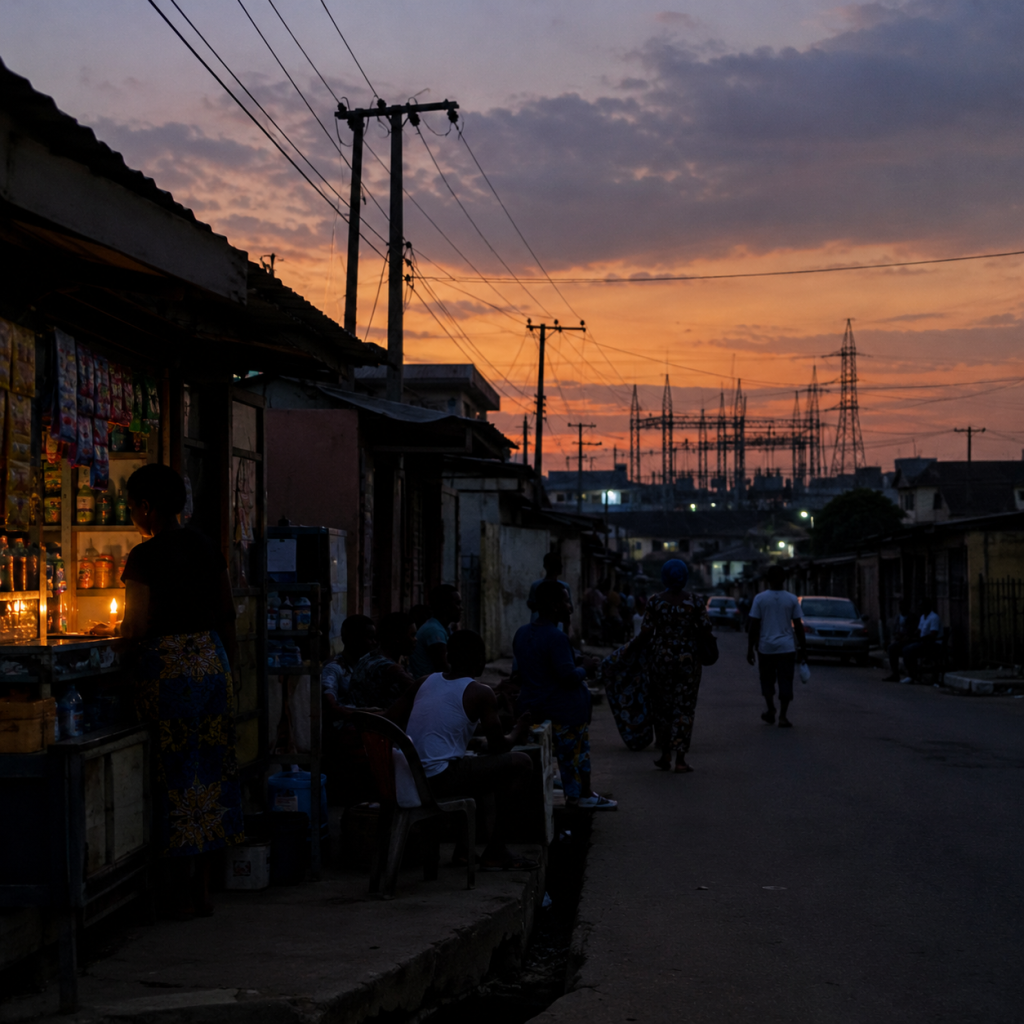
As dusk settles over Ikot Ebekpo, Ikot Ebidang, and Ikot Annang, an orange glare pierces the sky. The flame rises and roars from twin stacks, casting long shadows across zinc rooftops and vibrating through walls like a low-flying jet that never passes.
“It was supposed to burn for only seven days,” says Edward George, standing metres from the flare in Ikot Ebekpo. “That is what we were told.” The flare has been burning for more than a month.
“At night, the community becomes day. You cannot sleep. The heat enters your body, and you become restless. The vibration shakes your house. No one told us this would happen.”
A week after the gas flare started in early January, causing sleepless nights due to the heat, George sent his children away to relatives outside the local government area.
“Let me breathe the burning gas and die, not my children,” he says, his voice steady but heavy. “I cannot allow these Indians who own the company to send me packing from my own community.”
In the mornings, residents pull soot from their nostrils. His cassava and vegetables have withered from the relentless heat. Those with asthma have fled.
Homes Just Metres from the Flames
Using Google Earth satellite imagery, PREMIUM TIMES measured the distance from the flare stacks to the nearest home: just 118.31 metres—barely longer than a FIFA-regulation football pitch. In denser residential clusters, homes sit 256.62 metres away. From those distances, the heat is felt, the tremor constant, the fiery glow inescapable.
Some houses now stand abandoned, overrun by weeds—silent witnesses to the exodus.
Skin That Burns, Rivers That No Longer Yield Fish
Margaret Akpan’s voice carries both worry and anger. “Since last month when the flare started, I have had heat rashes. My children, too. We have taken medication, but it refuses to go.”
She says the rashes are widespread. “In the market, people complain of the same thing. Cough is also common now, more than before.”
Across the narrow waterways of Ikot Ebidang, fishers speak of a different loss. When PREMIUM TIMES visited the community riverbank, the absence was striking: no boats fishing, none bobbing against the shore, no nets drying in the sun.
Francis Ekanem, a fisherman, says a strange substance now coats the water’s surface. “We suspect it is residue from the flare. The water is hotter. The fish have migrated.” For a month, he has caught nothing. “I feed my family from fishing. Now I borrow money to eat. I am in serious debt.”
The Village Secretary, Nsa Victor, says the impact reaches beyond the river. “Our roofs have turned brown since the flare started in 2024 in the nearby local government area. Now that the flare is in our community, our roofs have turned black, and many roofing sheets are gone.” He rubs his eyes as he speaks. “There is itching. There are rashes. From what we have read, this flare is cancerous.”
Victor Ituen, former youth president of Ikot Ebidang, puts it starkly: “The moment you arrive in Onna, the air changes. This is not global warming. This is community burning.”
Oil Wealth Beneath, Fire Above
The flaring is linked to the Utapate field asset, wholly owned by NNPC Exploration and Production Limited (NEPL), the upstream subsidiary of the Nigerian National Petroleum Company Limited.
Operations are handled by Natural Oilfield Services Limited (NOSL), a subsidiary of Sterling Oil Exploration and Energy Production Company Limited, under a 15-year agreement signed in 2019. Production commenced in May 2024. According to NNPC Ltd, the block holds more than 330 million barrels of oil, 45 million barrels of condensate, and 3.5 trillion cubic feet of natural gas.
Despite the wealth generated, residents say it dissipates into the air as wasted energy—raising concerns for host communities.
Since operations began, controversies have trailed the company. In March 2025, petroleum workers picketed Sterling Oil over alleged anti-labour practices. In April 2025, the Akwa Ibom State Government accused the company of illegal operations and encroachment beyond legally allotted land in Eastern Obolo. Now, residents in Oniong East fear the expansion of these challenges into their communities.
A new rig has been constructed within Ikot Ebidang’s residential area, though flaring has not yet begun there.
“We are afraid it will get worse,” says Regina Udonsek, the women’s leader. “If they must flare, let it be very far from where people live, please.”
Chief Uta Harry of Ikot Ebidang puts it simply: “This is a residential area. Lay the pipes and flare the gas far away. They are doing this at the detriment of the people.”
The Law and the Silence
Nigeria’s Petroleum Industry Act prohibits gas flaring except in emergencies or where exemptions are granted by the Nigerian Upstream Petroleum Regulatory Commission (NUPRC). Section 104(1) provides that flaring without approval constitutes an offence.
When contacted, Sterling Oil’s Akwa Ibom Media Manager, Aniekeme Finbarr, said the company had obtained necessary exemptions and permits. “All permissions and certifications have been well done.” He added that a meeting was planned between the local government council, the community, and the company to discuss complaints.
PREMIUM TIMES sought clarification from NEPL regarding proximity to homes, mitigation measures, and compensation plans. NNPC’s Chief Corporate Communications Officer, Andy Odeh, did not respond.
The Akwa Ibom State Coordinator of NUPRC, Etukudoh Williams, declined comment and directed enquiries to Abuja headquarters. Attempts to reach the commission’s national media office were unsuccessful.
For residents living under the flare’s glow, regulatory procedure feels distant.
Holding the Line for Survival
On February 11, the Health of Mother Earth Foundation (HOMEF), in collaboration with the Peace Point Development Foundation, convened a renewable energy dialogue in Ikot Ebidang. Community members listed what they had observed since exploration began: declining crop yields, dwindling fish catch, corroded rooftops, noise-induced insomnia, skin infections, and persistent cough.
Nnimmo Bassey, executive director of HOMEF, warned that these are only immediate impacts. “If this is not stopped, there could be reproductive problems, cancer, and blood disorders. The company responsible must be held to account.”
In the community’s communiqué, they demanded that associated gas be piped away from residential areas rather than flared within them, that compensation be paid for livelihood losses, and that health facilities be provided. They also demanded that the government prioritise their well-being rather than sacrifice them in efforts to increase oil production targets.
A Nation’s Choice
Nigeria seeks to raise oil production to 3 million barrels per day. The Utapate field in Akwa Ibom is expected to contribute 80,000 barrels per day.
According to NOSDRA’s gas flare tracker, between May 2024 and January 2026, 12.5 million standard cubic feet of gas—valued at 43.7 million US dollars and with the potential to generate 1.2 billion kilowatt-hours of electricity—has been flared within the Utapate field. That amount could power about 800,000 Nigerian households for one year.
Instead, in Oniong East, families measure oil production in sleepless nights, withering farms, and empty fishing nets.
As the communities continue to sit in forced daylight and breathe soot, they await a moment when someone in authority will decide that their lives are worth more than a burning stack.