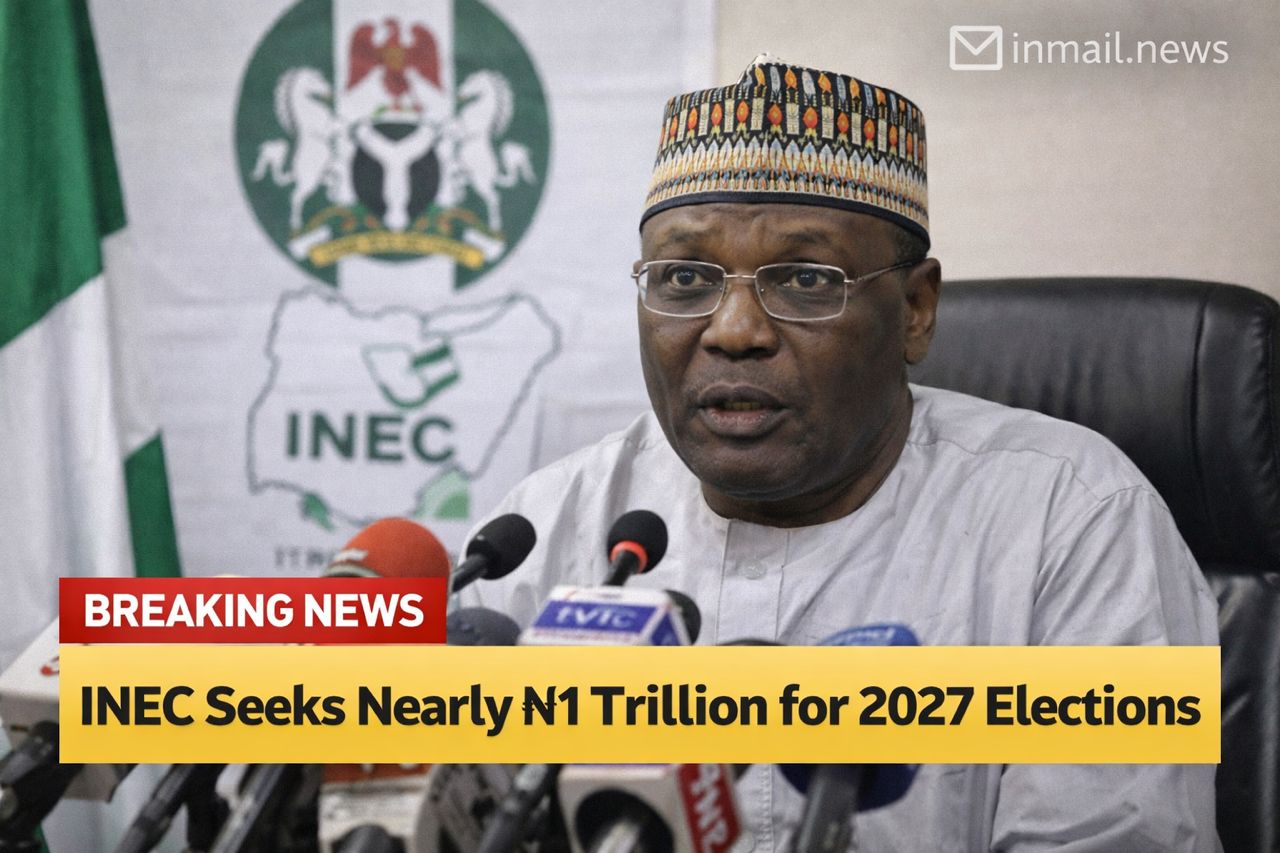
\n\nThe Independent National Electoral Commission (INEC) has formally asked the Federal Government to allocate nearly ₦1 trillion to enable the smooth conduct of the country’s 2027 general elections, one of the most expensive electoral exercises in Nigeria’s history.
INEC Chairman Prof. Mahmood Yakubu disclosed the commission’s financial plea on Wednesday in Abuja, during the formal presentation of its 2026-2028 Medium Term Expenditure Framework (MTEF) and Fiscal Strategy Paper to the Federal Ministry of Finance. According to Yakubu, the commission faces significant funding requirements to implement key reforms and logistical arrangements ahead of next year’s polls. (punchng.com)
The requested amount — totaling ₦970 billion — covers various operational needs across the electoral cycle, including:
• Printing of ballot papers
• Procurement and deployment of voter accreditation and results transmission technology
• Staff training and capacity building
• Nationwide logistics for personnel and material movement
• Sensitisation and voter education campaigns
Prof. Yakubu underlined that the bulk of the cost is driven by the commission’s plan to adopt new technologies aimed at improving the credibility and transparency of elections, while also expanding voter access across the country’s 774 local government areas.
The commission’s 2027 budget projection is significantly higher than those of previous election cycles, reflecting both inflationary pressures and ambitious reforms contained in the proposed Electoral Act (Repeal and Enactment) Bill, 2026, which has been a subject of intense debate in the National Assembly.
INEC’s leadership has repeatedly emphasised the importance of reliable funding in executing a credible election, noting that inadequate resources in past cycles hampered efficiency and contributed to logistical challenges in remote communities.
Speaking further, Prof. Yakubu appealed to both the executive and legislative arms of government to treat the commission’s budgetary request with urgency, stating that any delay in funding approval could disrupt preparations and weaken public confidence in the process.
Reacting to the request, some civil society groups and political commentators have called for greater transparency and accountability in how the funds are released and utilized, suggesting that budget tracking mechanisms be strengthened to reassure Nigerians ahead of the polls.
The Federal Ministry of Finance is expected to review INEC’s budget proposal and forward it to the National Assembly for further assessment alongside other federal expenditures.