Nigeria’s electricity subsidy bill could rise to about ₦2 trillion this year as the Federal Government maintains that there are no immediate plans to increase electricity tariffs.
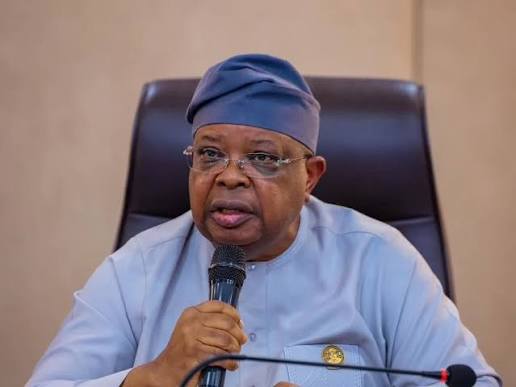
The Minister of Power, Joseph Tegbe, disclosed this at a media parley in Abuja while marking his first 100 days in office. Tegbe said the government’s priority is to improve electricity supply, strengthen the power sector and protect vulnerable consumers rather than impose additional costs on electricity users.
“There are no immediate plans to increase electricity tariffs. Our goal is to build a commercially viable power sector while protecting vulnerable consumers,” Tegbe said.
The potential ₦2 trillion subsidy burden follows the ₦1.93 trillion electricity subsidy obligation recorded by the Federal Government in 2025, according to the Nigerian Electricity Regulatory Commission’s 2025 Annual Report. The subsidy represents the gap between the cost of supplying electricity and the tariffs paid by consumers.
Tegbe said the power sector continues to face challenges across the entire electricity value chain, including limited gas supply, ageing generation equipment, transmission constraints, poor payment collection and accumulated debts.
He disclosed that the government had mobilised an estimated ₦1.23 trillion to address part of the sector’s ₦3.3 trillion debt backlog, with the aim of improving liquidity and strengthening the ability of power-sector operators to maintain generation and supply.
Electricity generation has also improved, reaching a peak of 5,330 megawatts in August and September, compared with between 3,700MW and 4,700MW before June. However, the minister acknowledged that higher national generation does not automatically mean improved electricity supply for every community.
For businesses, manufacturers and households, the cost and reliability of electricity remain major concerns, with many consumers continuing to depend on alternative power sources when grid supply is inadequate.
With the Federal Government ruling out an immediate tariff increase, the subsidy burden is expected to remain a major issue for the power sector as authorities work to improve infrastructure, collections, gas supply and overall electricity reliability.