
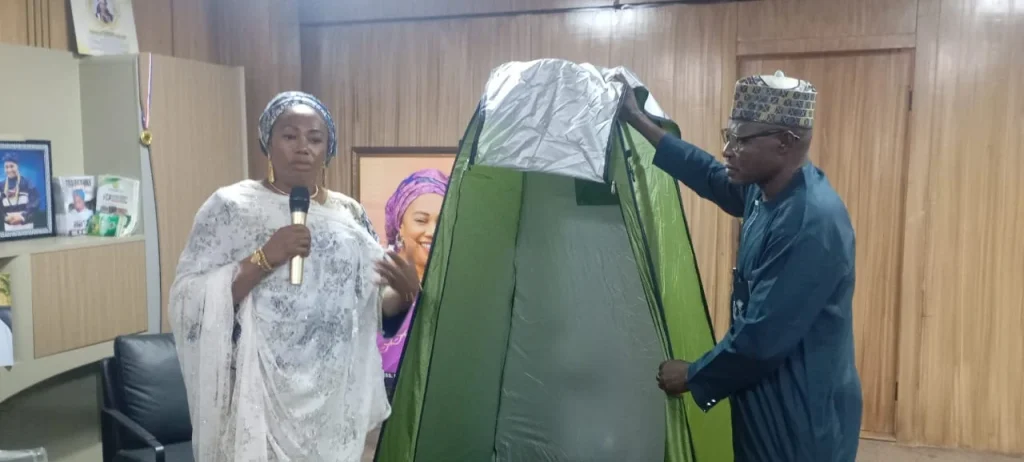
The Nasarawa State Government has intensified efforts to eliminate open defecation across the state, declaring zero tolerance for the practice and introducing mobile toilet facilities as part of its sanitation campaign. The Commissioner for Environment, Solid Minerals and Mining, Dr Margaret Elayo, announced the initiative on Thursday during a media briefing ahead of the 2026 World Toilet Day, scheduled for November 19. She described open defecation as both an embarrassment and a serious public health emergency, warning that inadequate access to proper sanitation exposes residents to preventable diseases. According to her, the government is committed to working with local government authorities, traditional rulers and community leaders to ensure that more communities attain open defecation-free status.
She stressed that access to clean and safe toilet facilities must become a priority across residential areas and public institutions, particularly in communities where sanitation infrastructure remains inadequate.As part of the intervention, Elayo donated a mobile toilet facility alongside recycling materials, explaining that the initiative would be extended to schools and other public locations experiencing sanitation challenges. She placed particular emphasis on improving toilet facilities for female students, noting that inadequate sanitation exposes girls to unnecessary discomfort, embarrassment and difficulties in maintaining personal hygiene.
The commissioner also disclosed that the government was encouraging the construction of accessible public toilets in markets, motor parks, schools and healthcare centres, with special consideration for women, children and persons living with disabilities. She called on community leaders to enforce sanitation regulations within their respective areas and urged schools to strengthen hygiene education while ensuring that available toilet facilities are properly maintained. Businesses and development partners were equally encouraged to invest in sanitation infrastructure to support the state’s efforts.The commissioner further warned that open defecation continues to expose communities to serious health risks, including cholera, typhoid and diarrhoeal diseases, which disproportionately affect children and vulnerable populations. She noted that more than 3.5 billion people worldwide still lack access to safely managed sanitation facilities, highlighting the scale of the global challenge.
Elayo maintained that ending open defecation would require more than government interventions, stressing the importance of individual responsibility, community participation and sustained investment in sanitation services. She urged residents to maintain clean surroundings, adopt proper hygiene practices and regard access to adequate toilet facilities as a fundamental necessity rather than a luxury. The initiative forms part of Nasarawa’s broader environmental health strategy and aligns with the national ambition of ending open defecation by 2030.