
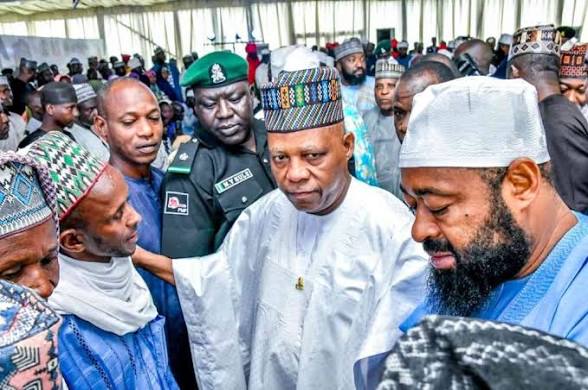
The Federal Government has pledged ₦250 million in financial support to the families of 37 illegal miners who died while in the custody of the Nigeria Security and Civil Defence Corps (NSCDC) in Minna, Niger State.
The commitment was disclosed as authorities continued to respond to the tragedy and concerns surrounding the circumstances that led to the deaths of the miners. The Federal Government said the financial assistance was intended to provide support to the affected families following the loss of their relatives.
The incident has attracted attention because the victims reportedly died while in the custody of a government security agency. Their deaths have therefore raised questions about the circumstances surrounding their detention, their condition while in custody and the events that preceded the tragedy.
The 37 miners were reportedly being held by the NSCDC after being arrested in connection with illegal mining activities. Illegal mining remains a major challenge in several parts of Nigeria, with authorities frequently carrying out arrests and enforcement operations against individuals involved in unauthorised mining.
Mining activities, particularly when carried out without proper regulation, have been linked to environmental degradation, destruction of farmland and contamination of water sources. The Federal Government has consequently continued to intensify efforts to tackle illegal mining and ensure that mining activities are conducted within the country’s legal and environmental requirements.
However, the death of the miners while in custody has shifted attention beyond the issue of illegal mining to questions about the treatment and welfare of detainees.
The government’s ₦250 million pledge is expected to provide some immediate assistance to families who may have lost their sources of income or household support. For many of the affected families, the financial consequences of losing a relative can be significant, particularly where the deceased was responsible for supporting children, spouses or elderly parents.
The government is also expected to face pressure to provide clearer information about what happened to the miners and whether any officials or individuals should be held responsible if wrongdoing or negligence is established.
The incident has renewed calls for greater accountability whenever people die while in government custody. Security agencies are required to ensure that people in their care receive appropriate treatment and that their basic welfare and safety are protected.
Meanwhile, authorities are expected to continue investigations into the circumstances surrounding the deaths. Such investigations will be important in establishing a clear timeline of events and determining whether the deaths resulted from a specific incident, medical complications, negligence or other factors.
The tragedy also highlights the complicated nature of Nigeria’s fight against illegal mining. While the government has a responsibility to enforce mining laws and protect the country’s natural resources, enforcement operations must also be carried out in accordance with the law and with respect for the rights and safety of those arrested.
The Federal Government’s financial intervention is therefore being viewed as an immediate response to the human impact of the incident, while questions surrounding accountability and the circumstances of the deaths remain.
Families of the victims are expected to receive the promised support as the government continues to address the aftermath of the tragedy.
The case is likely to remain under public scrutiny as Nigerians await further findings from the relevant authorities and clearer explanations concerning what happened to the 37 miners before their deaths.