
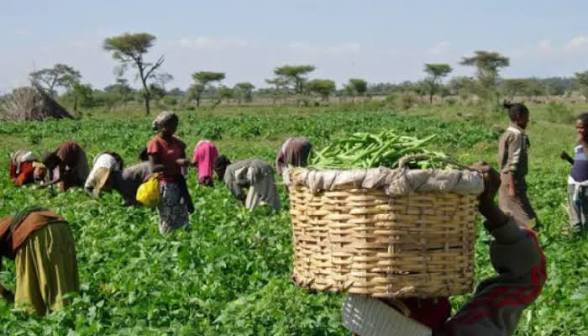
The Federal Government is calling for a major shift in the way agricultural extension services are delivered to Nigerian farmers.
The Minister of State for Agriculture and Food Security, Aliyu Abdullahi, said the country needs to move away from a system where information is simply supplied to farmers and instead develop a demand-driven model that responds directly to farmers’ needs and market requirements.
The minister made the call at the Africa Agribusiness Extension Summit, where stakeholders discussed how agricultural advisory services can be strengthened across the continent.
Under the proposed approach, farmers would be connected with verified and certified extension officers who can provide information based on the particular crops, location, production methods and markets relevant to them.
The minister raised concerns about the amount of unreliable information available to farmers, particularly as digital platforms and artificial intelligence make it easier for people to generate and distribute information.
He said farmers need access to information that is verified and relevant rather than simply receiving large amounts of material that may not address their actual problems.
The government also wants agricultural extension services to be connected more closely with markets. The minister pointed to commodities such as sesame and hibiscus, which have export markets, and argued that farmers need to know what buyers require before production decisions are made.
This includes issues such as product quality, standards and traceability.
The government also highlighted differences between Nigeria’s various agricultural zones. Farmers operating in different parts of the country face different soil, weather, crop and production conditions, meaning agricultural advice cannot always be the same everywhere.
Another major development is the review of the curriculum for diploma and Higher National Diploma agricultural programmes. According to the minister, practical training is expected to account for 70 per cent of course content under the revised curriculum.
Stakeholders at the summit also identified people, technology, data and partnerships as important pillars for improving extension services.
There are also plans to explore artificial intelligence and digital platforms to help farmers access agricultural information, including through basic phones and smartphones and in local languages.
The changes are significant because access to reliable information can influence farmers’ decisions on planting, inputs, pest management, harvesting, storage and marketing.
The government’s proposed model therefore seeks to make agricultural extension more practical and connected to the realities of farmers and the markets they serve.