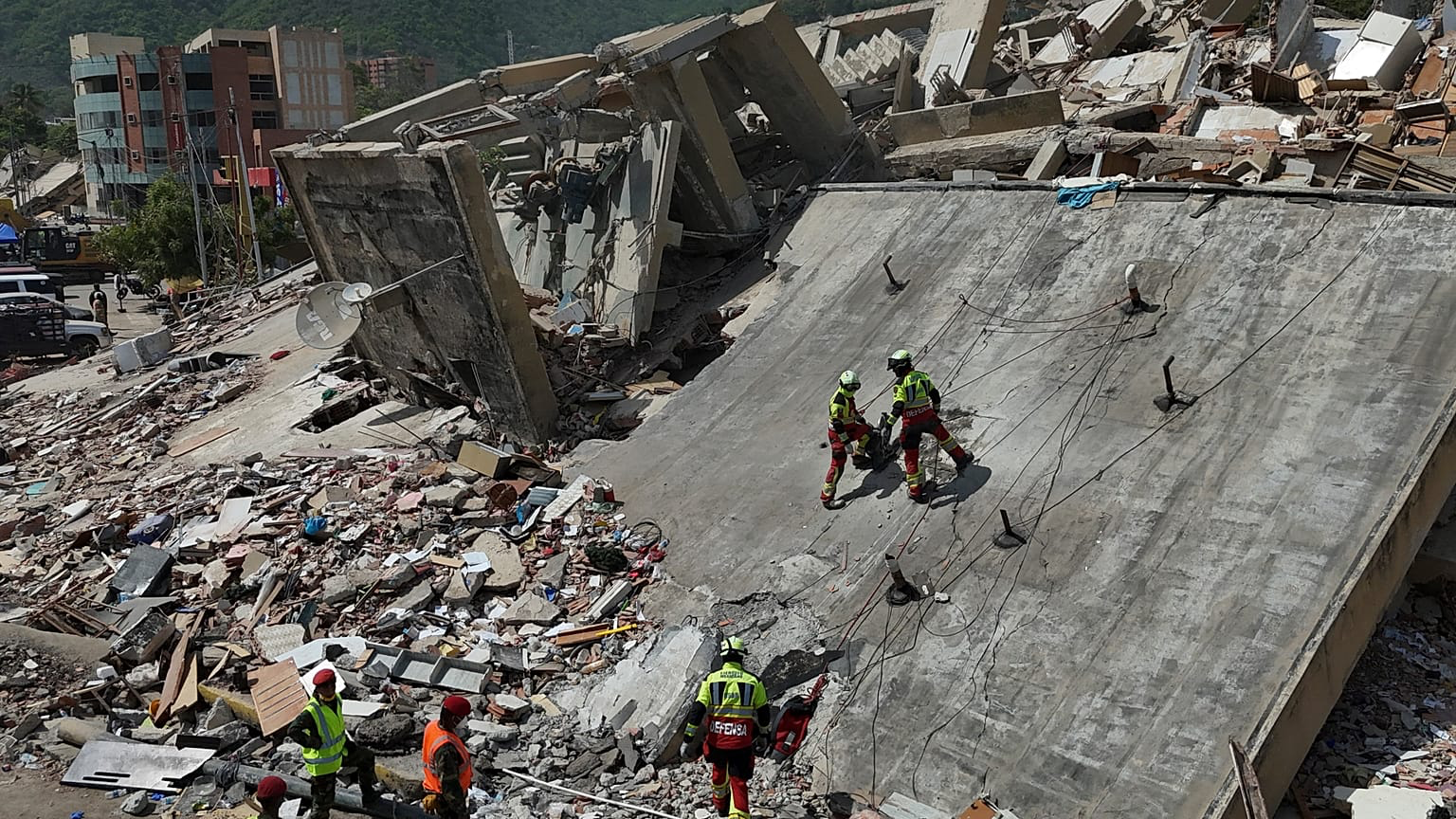
\n\nFive days after powerful back-to-back earthquakes struck Venezuela, the humanitarian crisis continues to unfold with nearly 50,000 people still unaccounted for and the official death toll exceeding 1,450. Rescue teams are working around the clock in devastated urban and mountainous areas, pulling survivors from mountains of rubble in what many are calling miraculous efforts. A 21-year-old man was recently extracted alive after 106 hours trapped, while emotional stories emerge of a mother and her newborn baby surviving against the odds. 
The quakes have left entire neighborhoods in ruins, with over 3,200 injured and infrastructure collapse complicating aid delivery. International support is pouring in, but challenges remain immense due to the scale of destruction. Venezuelan authorities and global partners are racing against time as the critical 72-hour rescue window has long passed, shifting focus toward recovery and shelter for survivors.
This disaster resonates in Nigeria, where communities are no strangers to natural and human-induced crises. Local experts are drawing parallels to how rapid response and community resilience can mitigate losses, as seen in past flooding events. Nigerian humanitarian organizations have expressed readiness to contribute lessons from domestic disaster management to international efforts in Venezuela.