
\n\n
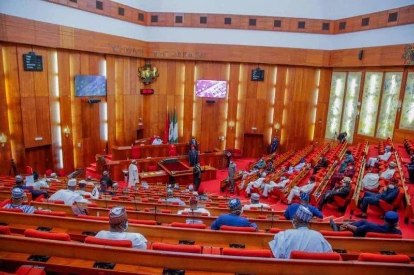
The Senate on Wednesday passed the long-awaited State Police Bill, marking a historic shift in Nigeria’s security architecture and paving the way for states to establish and manage their own police formations. The constitutional amendment, which enjoyed broad support among lawmakers, seeks to decentralise policing by creating state-controlled police services that will operate alongside the existing Federal Police Service.
Under the provisions of the bill, governors will be empowered to appoint State Police Commissioners, subject to constitutional guidelines and oversight mechanisms. Each state that chooses to establish a police force must do so through legislation passed by its House of Assembly and must meet nationally prescribed operational standards. While state police formations will be responsible for maintaining law and order within their respective states, the Federal Police Service will retain authority over terrorism, border security, interstate crimes, organised crime, and other matters of national security.
Lawmakers argued that the reform has become necessary due to worsening insecurity across the country, including rising incidents of banditry, kidnapping, terrorism, communal clashes, and violent crimes. Supporters of the bill believe state police will improve intelligence gathering, strengthen community policing, and enable faster responses to local security threats. Senate leaders maintained that the current centrally controlled policing system has struggled to adequately address Nigeria’s diverse and rapidly evolving security challenges.
To address concerns about possible abuse by state governments, the legislation includes safeguards designed to promote accountability and professional standards. The proposed framework provides for oversight by the National Police Council, while State Houses of Assembly will play a role in confirming appointments and monitoring operations. The bill now requires approval by at least two-thirds of the 36 State Houses of Assembly before it can become part of the Constitution. If ratified, it will represent one of the most significant security reforms since Nigeria’s return to democratic rule in 1999.