\n\nAn investigation into the Olusosun dumpsite in Ojota, Lagos, has uncovered worsening operational challenges that are slowing waste disposal activities and raising environmental and public health concerns. The facility, regarded as Africa’s largest dumpsite and managed by the Lagos State Waste Management Authority (LAWMA), is currently grappling with ageing equipment, frequent machinery breakdowns, deteriorating infrastructure, and mounting volumes of waste.
The challenges have resulted in long queues of refuse trucks waiting to offload waste, a common sight along the Ojota section of the Lagos-Ibadan Expressway. Residents and commuters have increasingly complained about persistent traffic congestion around the site, as well as the foul odour that emanates from the dumpsite and spreads across nearby communities.
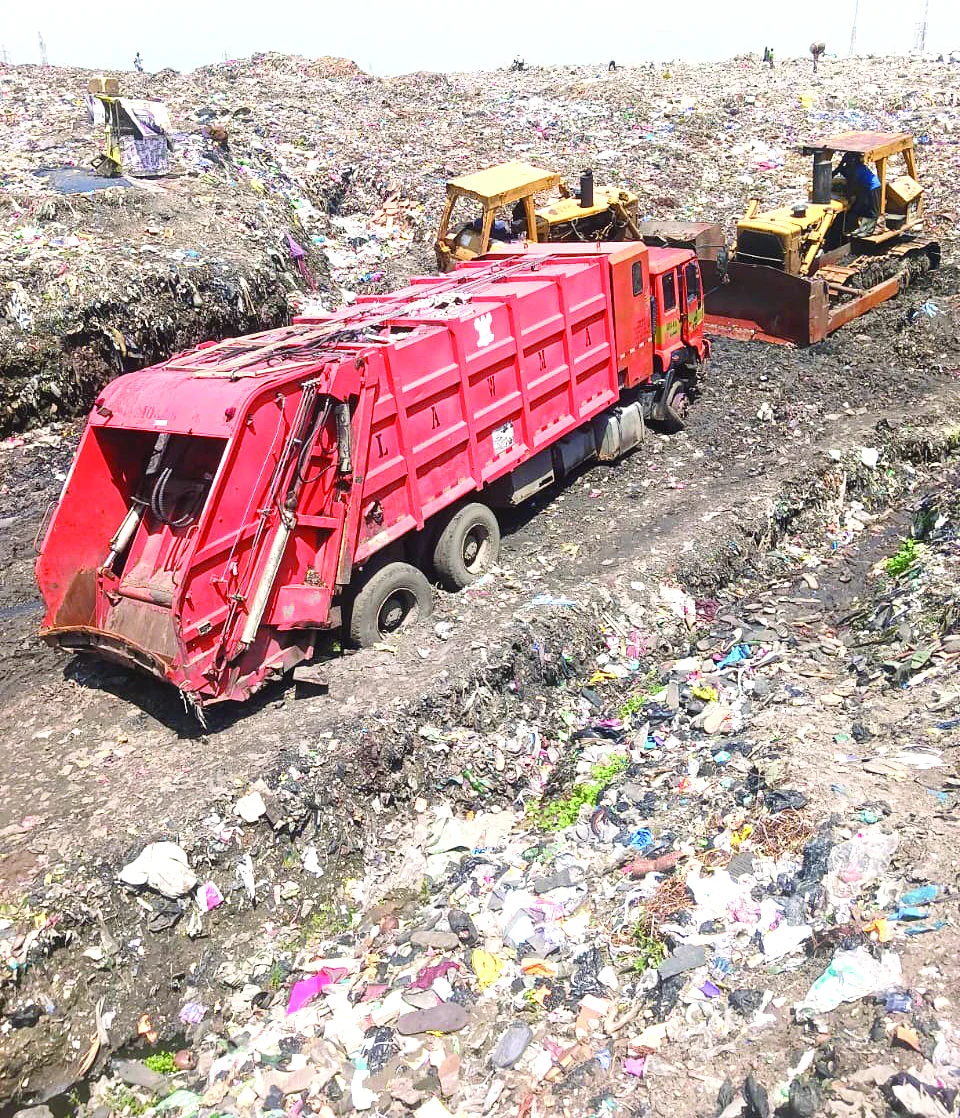
Findings from an undercover investigation revealed that several sections of the facility appear to be sinking, making access to designated dumping points difficult for refuse trucks. Poor road conditions within the dumpsite have also left several trucks and heavy-duty equipment stranded, further disrupting operations.
During the visit, multiple refuse compactors and other machinery were found trapped in muddy sections of the facility, while LAWMA personnel struggled to recover immobilised equipment, including a pay-loader and trucks with damaged tyres. In some instances, refuse spilled onto access roads, attracting scavengers who immediately sorted through the waste.
The report highlights growing concerns that the deteriorating state of the dumpsite could worsen waste management challenges across Lagos, contribute to environmental pollution, and increase health risks for residents living in surrounding communities if urgent intervention is not undertaken.