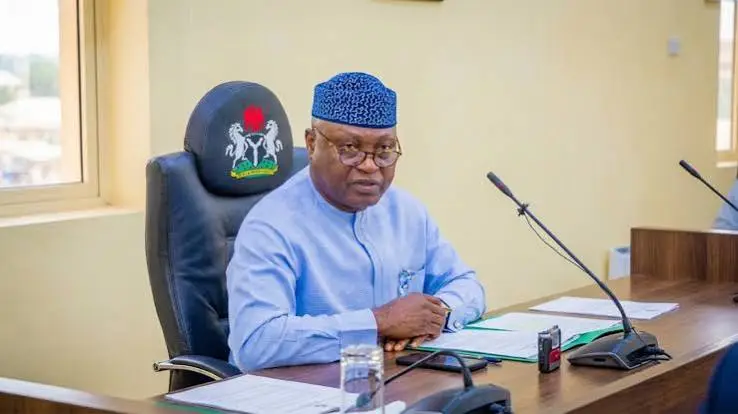
\n\nGovernor Biodun Oyebanji is seeking to make history in Saturday’s Ekiti governorship election as he aims to become the first incumbent governor in the state to win re-election since the return to democracy in 1999.
Although 13 candidates are contesting against him, political observers view the race as heavily tilted in favour of the incumbent, largely due to the perceived weakness of the opposition and the growing support he has received from key political figures across party lines.
The main challengers are Wole Oluyede of the PDP and Oluwadare Bejide of the ADC. Other candidates represent parties including the Labour Party, NNPP, AAC, ADP, Accord, APM, APP, PRP, YPP and ZLP.
Since taking office in 2022, Oyebanji’s administration has highlighted achievements such as road construction projects, the completion of the Ekiti Agro-Allied International Cargo Airport, youth-focused agricultural initiatives, improvements in healthcare facilities, and investments in education and security. While supporters cite these projects as evidence of effective governance, critics argue that the state requires a different direction and have urged voters to reject a second term bid.
A major boost to Oyebanji’s campaign has been the endorsement of all four living former governors of Ekiti State. These include Adeniyi Adebayo, Olusegun Oni, Ayo Fayose and Kayode Fayemi.
Adebayo has praised the governor’s performance and pledged support for his re-election, while Oni’s return to the APC earlier this year significantly weakened opposition ranks. Fayose, despite being a PDP leader, has repeatedly commended Oyebanji’s leadership and publicly backed his second-term ambition. Fayemi has also reaffirmed his support, describing Oyebanji’s emergence as his successor as one of his proudest political achievements.
The APC believes the combination of incumbency, visible projects, political alliances and support from former governors places Oyebanji in a commanding position ahead of the poll. Party spokesperson Segun Dipe argues that unlike previous elections marked by political tension, the current environment favours continuity, with the APC controlling the presidency, the state government and all local government councils in Ekiti.
As voters prepare to head to the polls, the key question remains whether the opposition can overcome the APC’s formidable political structure or whether Oyebanji will secure a historic re-election victory.