\n\n
A South African politician has come under intense criticism after describing Nigerians as “horrible people” during a farewell gathering organised for Nigerians leaving South Africa amid ongoing anti-immigration protests and xenophobic tensions. The remarks were made by Thabile Sibeko, president of the Inizwe Nathi Party, while addressing a group of Nigerians preparing to return home following weeks of unrest and hostility directed at foreign nationals in parts of South Africa.
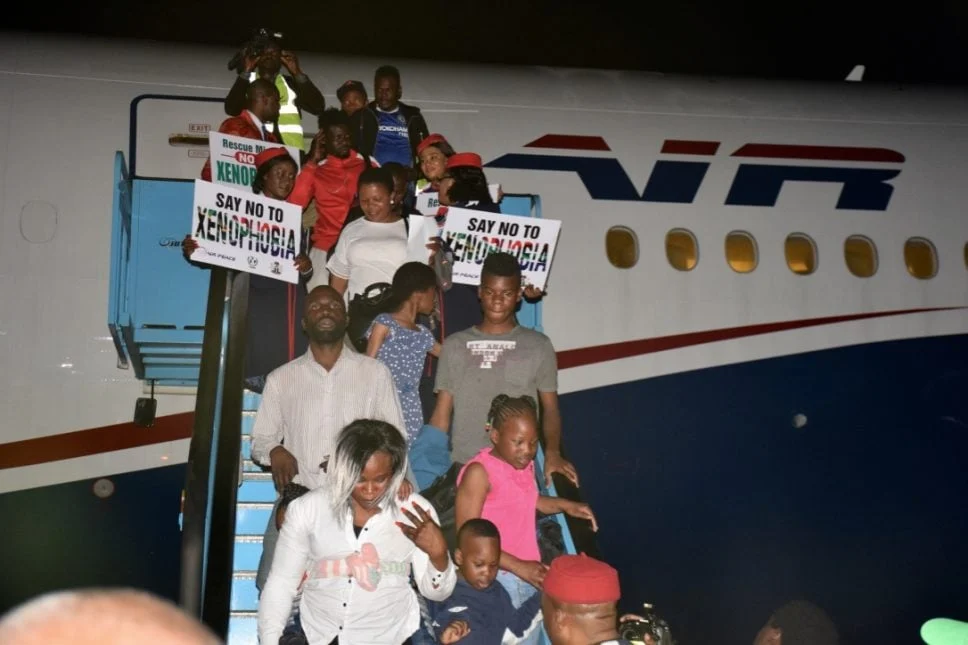
According to reports and videos from the event, Sibeko told the departing Nigerians to travel safely but went on to make derogatory comments about Nigerians, remarks that quickly spread across social media and triggered outrage among many Nigerians and human rights advocates. The comments surfaced at a time when hundreds of Nigerians have been leaving South Africa after anti-immigration demonstrations escalated into attacks, harassment, and threats against foreign residents. More than 1,000 Nigerians reportedly registered for voluntary repatriation, with the first group already arriving in Lagos under a government-assisted evacuation programme.
The controversy has further strained discussions surrounding xenophobia and the treatment of African migrants in South Africa. Nigerian officials have repeatedly condemned attacks on their citizens, while the Nigerians in Diaspora Commission and the Nigerian High Commission in Pretoria have urged affected citizens to remain calm and prioritize their safety. Some returnees have alleged discrimination, difficulties renewing legal residency documents, and growing hostility from anti-immigration groups.
The latest incident has generated widespread condemnation online, with many Nigerians calling on South African authorities and political leaders to denounce inflammatory rhetoric that could worsen tensions. Analysts warn that statements targeting entire nationalities risk deepening divisions at a time when both countries are seeking to maintain strong diplomatic and economic relations. The controversy also comes amid renewed debates over migration, unemployment, and xenophobia in South Africa, issues that have repeatedly triggered friction between local communities and foreign nationals across the country.