\n\n
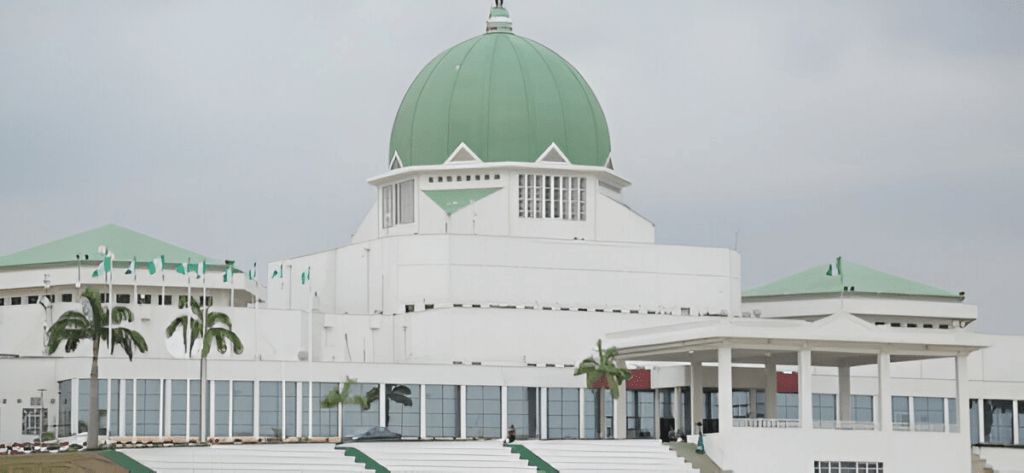
The National Assembly Arcade in Abuja has emerged as a powerful but contested symbol of Nigeria’s democracy, reflecting growing tensions between citizens and authorities over access to political power. Originally designed as a ceremonial forecourt within the legislative complex, the space has increasingly been seen by activists and civil society groups as a natural venue to express grievances directly to lawmakers. This evolving perception has led to repeated confrontations between protesters seeking access and security operatives tasked with protecting one of the country’s most sensitive institutions. 
Architecturally, the arcade was never intended to function as a protest ground but rather as a symbolic and ceremonial space representing Nigeria’s unity in diversity. Featuring sculptures of different ethnic groups, it was designed as a meeting point where lawmakers could engage with constituents and host official activities. However, security concerns over time have led to tighter restrictions, with most demonstrations now confined to outer perimeters such as the Mopol Gate, where protesters are often stopped and their petitions collected by officials for onward transmission to relevant legislative committees. 
Since Nigeria’s return to democracy in 1999, public expectations around civic participation have shifted significantly, with citizens increasingly demanding closer access to elected representatives. While the constitution guarantees the right to peaceful protest, authorities retain the power to restrict demonstrations in sensitive locations for security reasons. This unresolved tension—between democratic access and institutional protection—continues to shape debates around the arcade, highlighting the need for clearer guidelines on where and how Nigerians can engage their legislature without compromising national security.