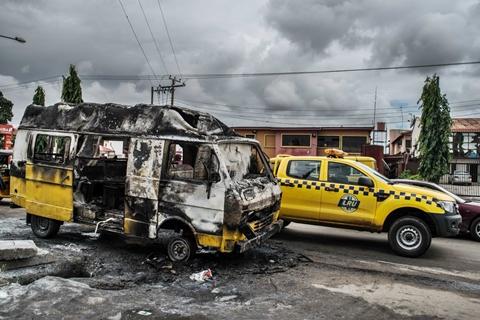
Seventeen passengers have been rescued after a Compressed Natural Gas (CNG)-powered commercial bus caught fire following a reported gas explosion at Berger Bus Stop along the Lagos-Ibadan Expressway.
The incident occurred on Wednesday, November 11, 2026, as the fully loaded Toyota Hiace bus was travelling from the Mowe-Ibafo axis towards Lagos.
According to the Lagos State Traffic Management Authority (LASTMA), the vehicle was carrying 18 occupants, including the driver, when it suddenly caught fire, causing panic among passengers and other motorists on the busy expressway.
LASTMA disclosed that its officials quickly arrived at the scene and successfully rescued 17 occupants, including the driver.
However, one male passenger seated at the rear of the vehicle sustained severe burn injuries during the incident. He was immediately evacuated and taken to the Lagos State Trauma and Emergency Centre at Toll Gate for urgent medical attention.
The Lagos State Fire and Rescue Service also deployed emergency personnel to extinguish the flames and prevent the fire from spreading. Officers of the Ojodu Police Division secured the area and helped maintain order during the rescue operation.
Reacting to the incident, LASTMA General Manager, Olalekan Bakare-Oki, commended the emergency responders for their quick intervention, which helped prevent further loss of lives.
He also urged commercial transport operators, particularly those using CNG-powered vehicles, to carry out regular professional inspections and ensure that their gas storage and delivery systems are properly maintained.
The incident has renewed concerns about safety standards surrounding gas-powered commercial vehicles in Nigeria, especially as the country continues to encourage the adoption of alternative fuel sources.
Although CNG is being promoted as an alternative to conventional petrol and diesel, experts and transport operators have continued to emphasise the importance of proper vehicle conversion, certified equipment and regular maintenance.
The incident highlights the need for stronger safety checks to protect passengers and prevent similar accidents on Nigerian roads.